Bolsas-migrantes
Cartografías de Resistencia
Cartografías de Resistencia
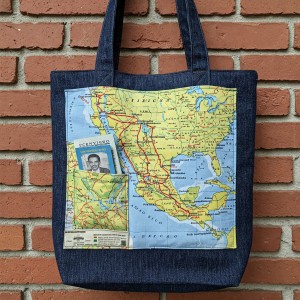
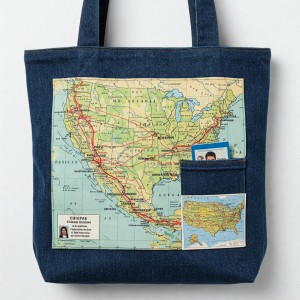
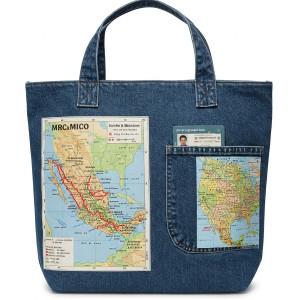
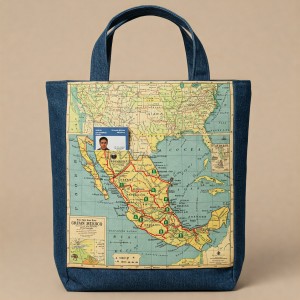
Bolsas Migrantes: Cartografías de Resistencia
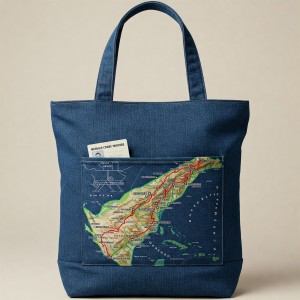
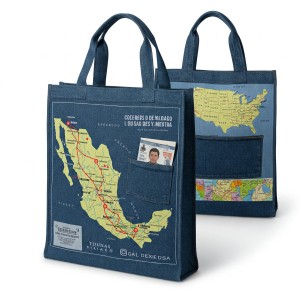
Es un proyecto artístico-activista-sostenible que resignifica la bolsa de mercado, transformándola en un dispositivo cartopolítico y un potente oxímoron espacial (Holmes) para la supervivencia de los migrantes en tránsito por México.
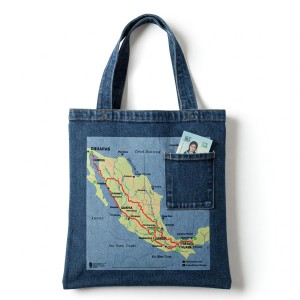
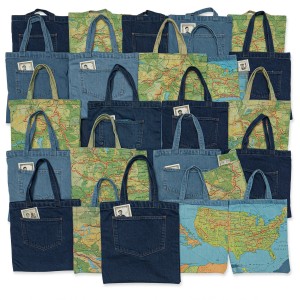
El proyecto se inspira en la funcionalidad de las bolsas del mercado de uso cotidiano para diseñar “Bolsas-Mapa”, objetos portátiles que integran mapas de rutas seguras, información esencial para el viaje y fragmentos de los testimonios de quienes ya han recorrido estos caminos. Estas bolsas, elaboradas a partir de mezclilla industrial reciclada, se convierten en herramientas de resistencia y solidaridad, ofreciendo una alternativa a las narrativas oficiales y visibilizando las experiencias de los migrantes, a menudo reducidas a cifras o estereotipos.
El proyecto se fundamenta en la teoría de las “fronteras paradójicas” (Staiger, 2019), explorando cómo estos espacios de separación se transforman también son puntos de conexión y lucha. En este contexto, el oxímoron espacial se manifiesta en varias tensiones:
-
La bolsa como refugio en un espacio hostil.
-
La bolsa como portadora de identidad en un contexto de despersonalización (donde los migrantes son personas en tránsito, desarraigadas, que se mueven de un lugar a otro sin un sentido fijo de pertenencia, y donde el espacio migratorio es un espacio de no-lugar, de provisionalidad).
-
La bolsa como herramienta de resistencia en un territorio de control (donde las fronteras y las rutas migratorias están fuertemente controladas por autoridades, crimen organizado y otras fuerzas que buscan regular y restringir el movimiento de las personas, convirtiéndolos en espacios de poder y vigilancia).
Esta idea resuena con la obra de Doris Salcedo, quien también utiliza objetos cotidianos para hablar de violencia y memoria, como en sus instalaciones con sillas apiladas o muebles obstruyendo espacios, que aluden a la ausencia y el desplazamiento forzado.
Además, el proyecto incorpora una dimensión de ficción crucial. Si bien se basa en testimonios reales y datos concretos, la creación de “Bolsas-Mapa” implica un ejercicio de imaginación y proyección. Se ficcionalizan las rutas seguras, se anticipan los peligros y se diseñan estrategias de supervivencia. Esta ficción no es un escape de la realidad, sino una forma de intervenir en ella, de proponer futuros posibles y de empoderar a los migrantes.
“Bolsas Migrantes: Cartografías de Resistencia” se articula en diversas etapas, desde la investigación y documentación de rutas migratorias a través de entrevistas con migrantes, hasta la creación y distribución de las bolsas en puntos estratégicos de la frontera de Chiapas y CDMX. El proyecto busca generar un impacto en múltiples niveles: ofrecer herramientas de apoyo directo a los migrantes, sensibilizar a la sociedad sobre la problemática migratoria y fomentar el diálogo intercultural. Además, se documentará todo el proceso en foto y video para la realización de un documental que difundirá aún más el alcance del proyecto, mezclando el registro documental con elementos de la ficción narrativa.
En su esencia, “Bolsas Migrantes: Cartografías de Resistencia” es una invitación a repensar el papel del arte como agente de transformación social. Al subvertir la función utilitaria de un objeto cotidiano, el proyecto crea un dispositivo artístico y político que desafía las fronteras físicas e ideológicas. Es un proyecto que da voz a los silenciados, que construye puentes de solidaridad y que apuesta por la creación colectiva de conocimiento como forma de resistencia y esperanza. La ficción, en este contexto, se convierte en una herramienta para imaginar otros mundos posibles, para construir narrativas de resistencia y para afirmar la humanidad de quienes son reducidos a meros cuerpos en tránsito. La relación con Holmes se hace evidente en la forma en que el proyecto espacializa la paradoja de la migración, convirtiendo objetos portátiles en territorios cargados de significado y memoria.
———————————————————————————————————
This is an artistic-activist-sustainable project that redefines the market bag, transforming it into a cartographic device and a powerful spatial oxymoron (Holmes) for the survival of migrants in transit through Mexico.
The project is inspired by the functionality of everyday market bags to design “Map Bags,” portable objects that integrate maps of safe routes, essential travel information, and fragments of the testimonies of those who have already traveled these paths. These bags, made from recycled industrial denim, become tools of resistance and solidarity, offering an alternative to official narratives and making visible the experiences of migrants, often reduced to numbers or stereotypes.
The project is based on the theory of “paradoxical borders” (Staiger, 2019), exploring how these spaces of separation are also points of connection and struggle. In this context, the spatial oxymoron manifests itself in several tensions:
The bag as a refuge in a hostile space.
The bag as a carrier of identity in a context of depersonalization (where migrants are people in transit, uprooted, moving from one place to another without a fixed sense of belonging, and where the migratory space is a space of non-place, of provisionality).
The bag as a tool of resistance in a territory of control (where borders and migratory routes are tightly controlled by authorities, organized crime, and other forces that seek to regulate and restrict the movement of people, turning them into spaces of power and surveillance).
This idea resonates with the work of Doris Salcedo, who also uses everyday objects to speak of violence and memory, as in her installations with stacked chairs or furniture obstructing spaces, which allude to absence and forced displacement.
Furthermore, the project incorporates a crucial fictional dimension. Although based on real testimonies and concrete data, the creation of “Map Bags” involves an exercise in imagination and projection. Safe routes are fictionalized, dangers are anticipated, and survival strategies are designed. This fiction is not an escape from reality, but rather a way of intervening in it, proposing possible futures, and empowering migrants.
“Migrant Bags: Cartographies of Resistance” is structured in various stages, from the research and documentation of migration routes through interviews with migrants to the creation and distribution of the bags at strategic points along the Chiapas-Mexico City border. The project seeks to generate impact on multiple levels: offering direct support tools to migrants, raising awareness about migration issues, and fostering intercultural dialogue. Additionally, the entire process will be documented in photos and video for the production of a documentary that will further disseminate the project’s reach, blending documentary evidence with elements of narrative fiction.
At its core, “Migrant Bags: Cartographies of Resistance” is an invitation to rethink the role of art as an agent of social transformation. By subverting the utilitarian function of an everyday object, the project creates an artistic and political device that challenges physical and ideological boundaries. It is a project that gives voice to the silenced, builds bridges of solidarity, and champions the collective creation of knowledge as a form of resistance and hope. Fiction, in this context, becomes a tool for imagining other possible worlds, for constructing narratives of resistance, and for affirming the humanity of those reduced to mere bodies in transit. The connection with Holmes is evident in the way the project spatializes the paradox of migration, transforming portable objects into territories charged with meaning and memory.
