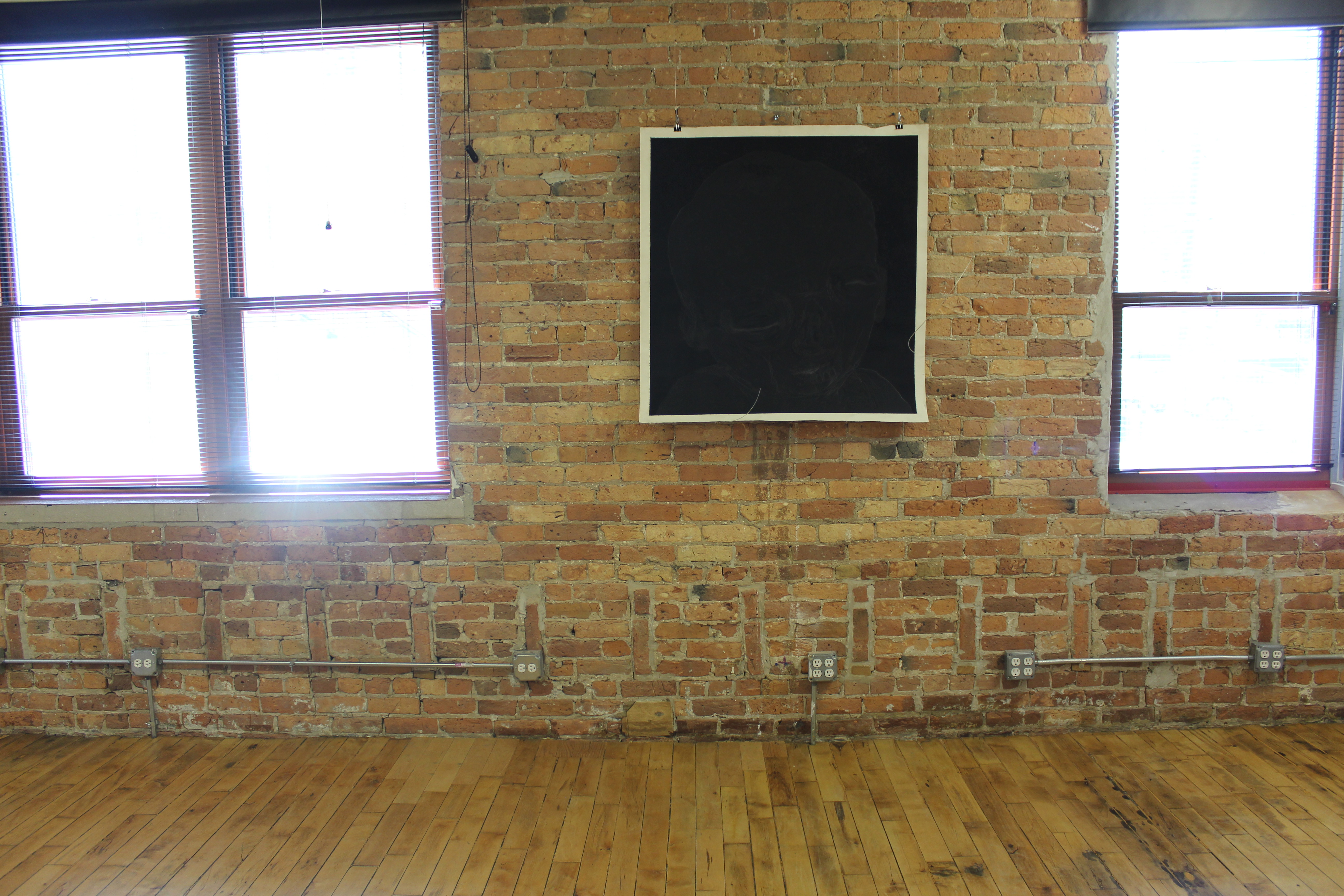
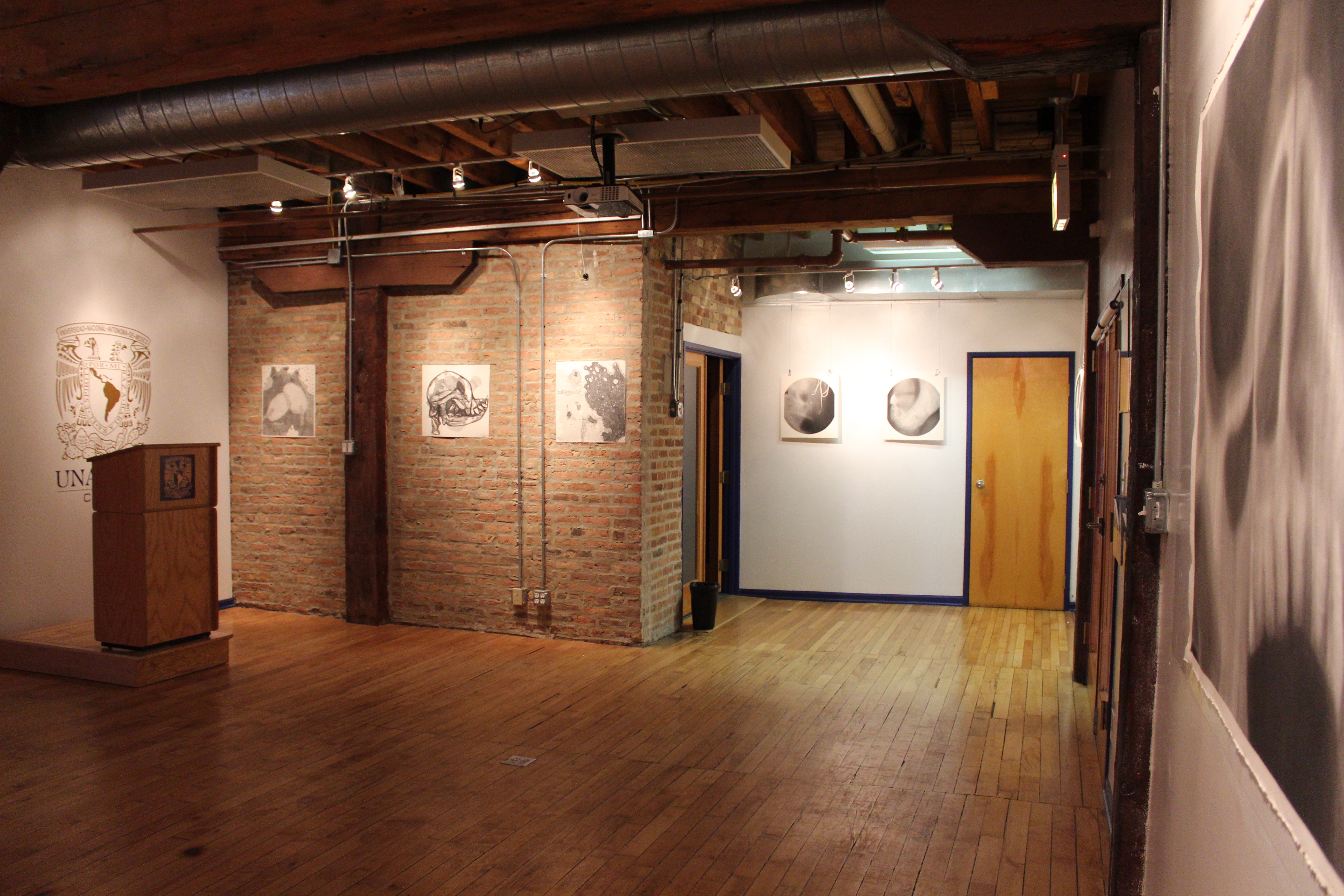
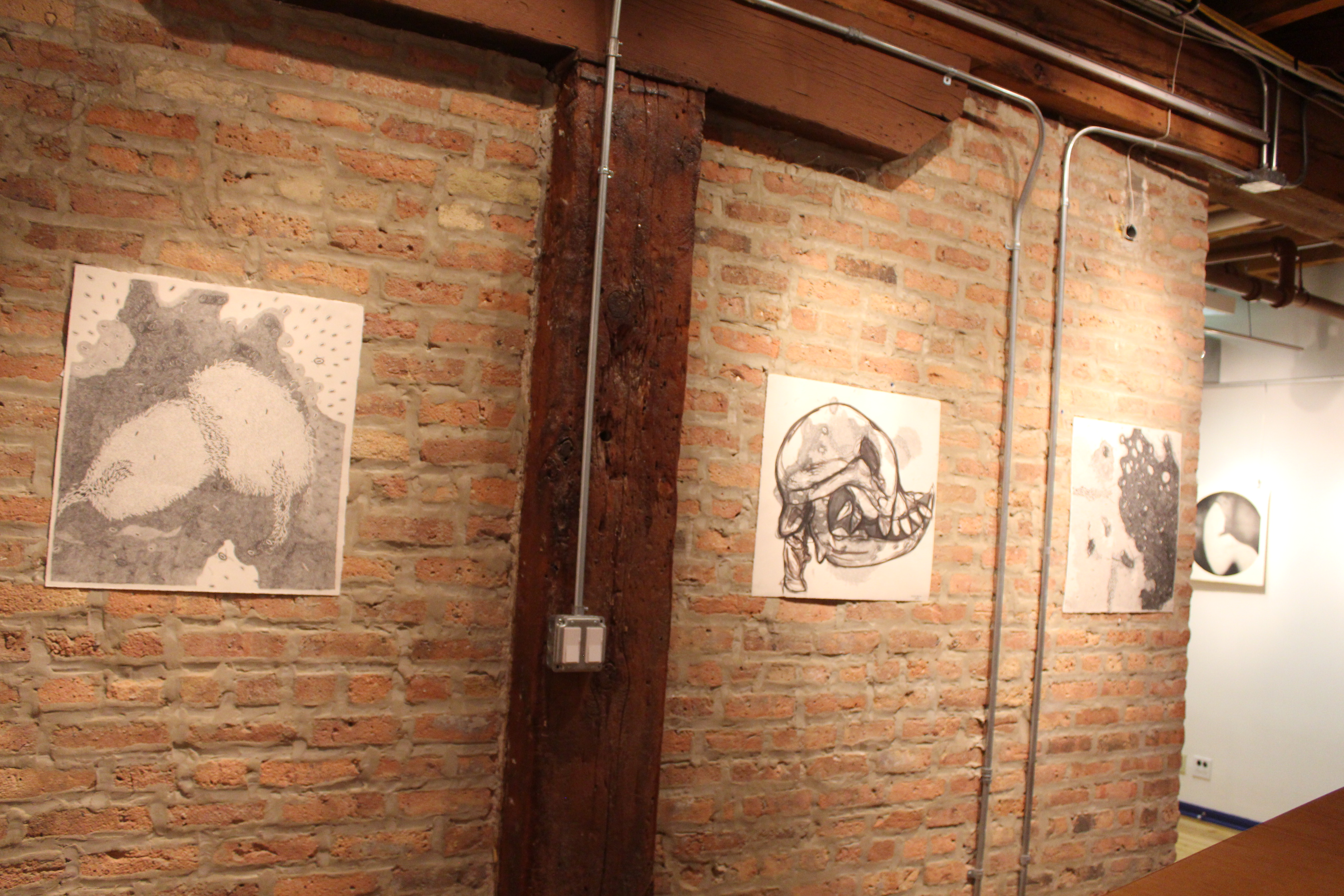
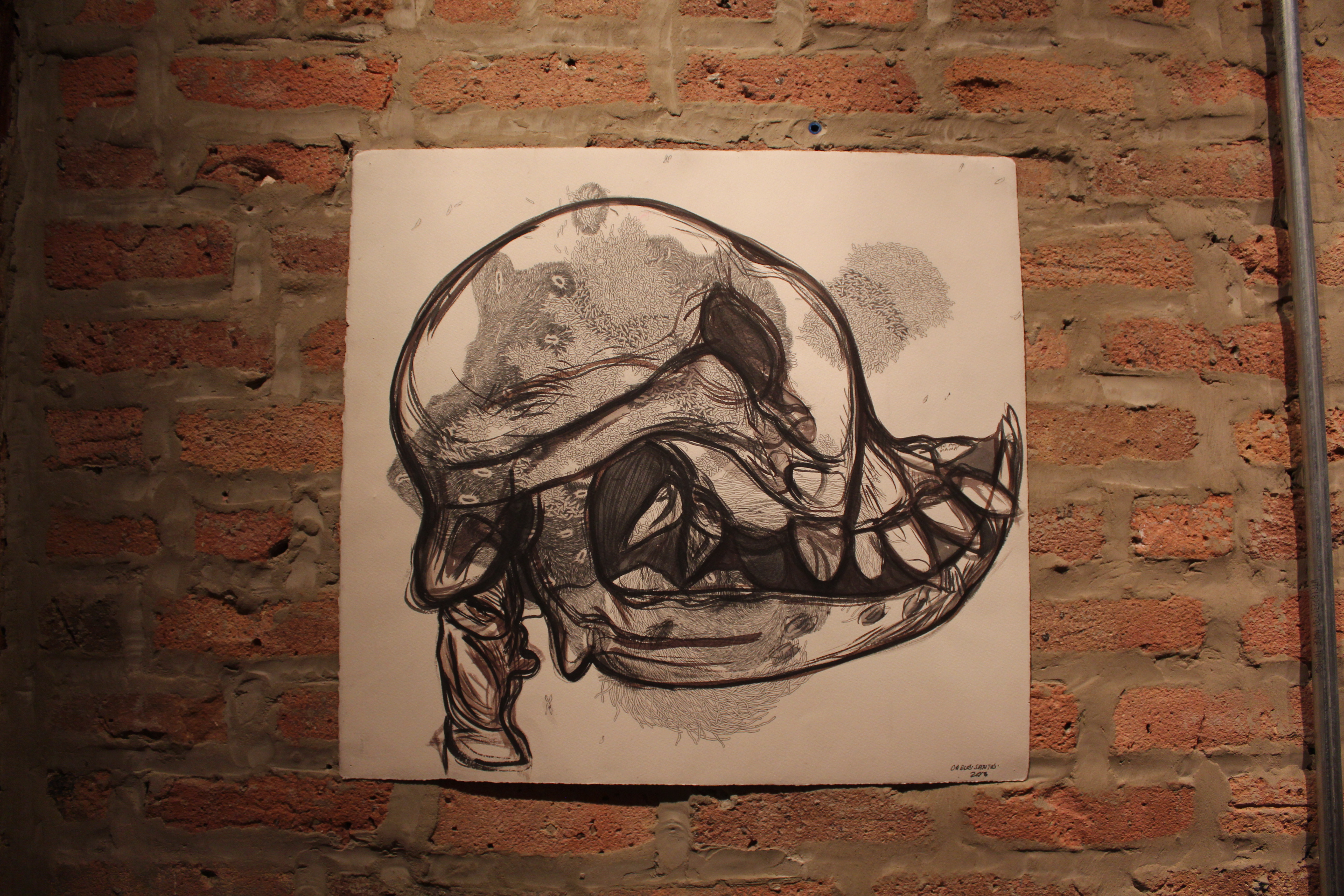
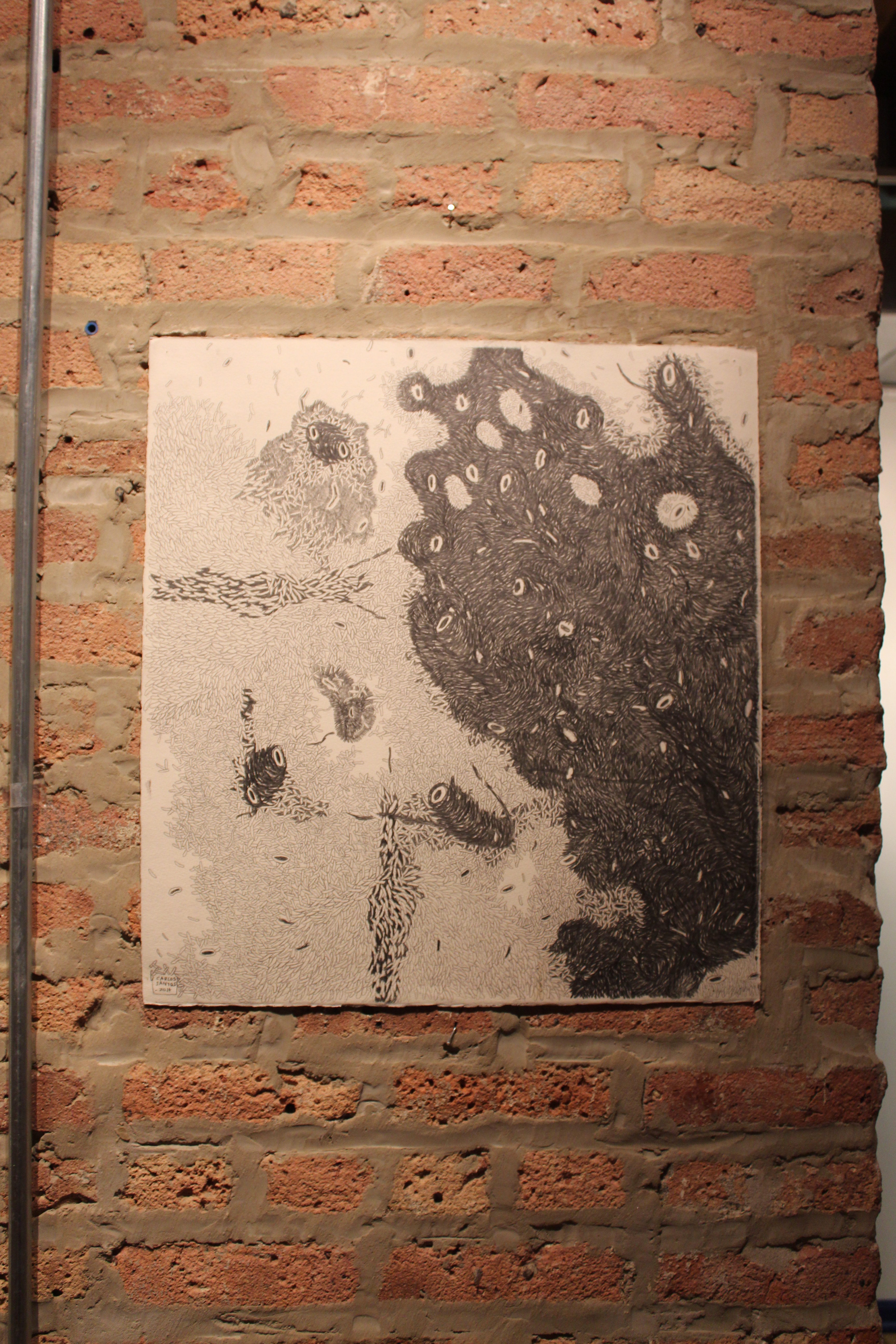
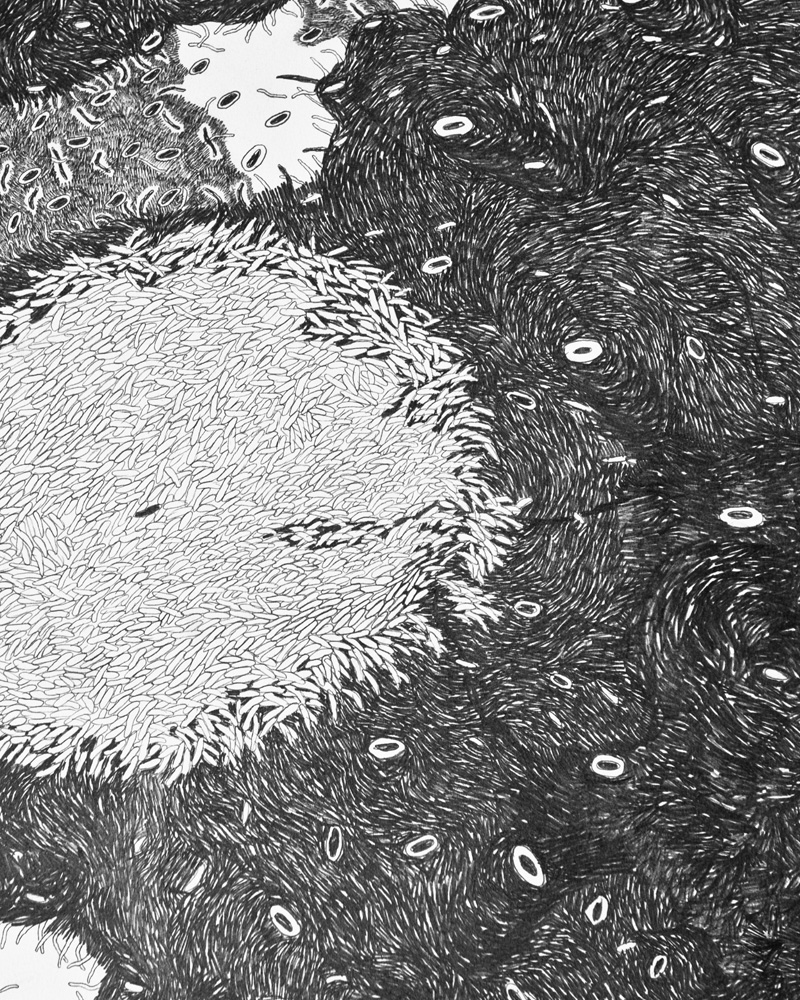
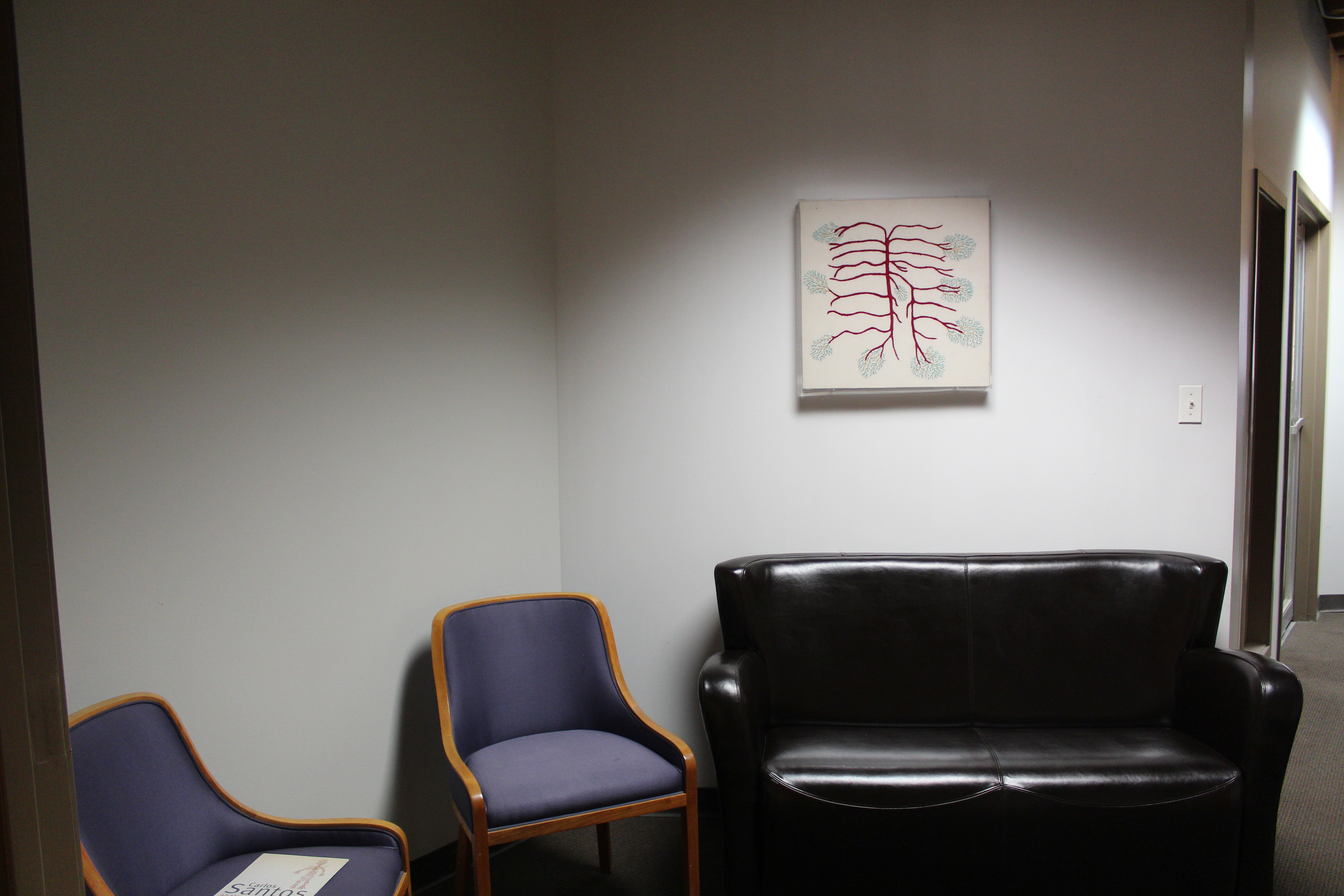
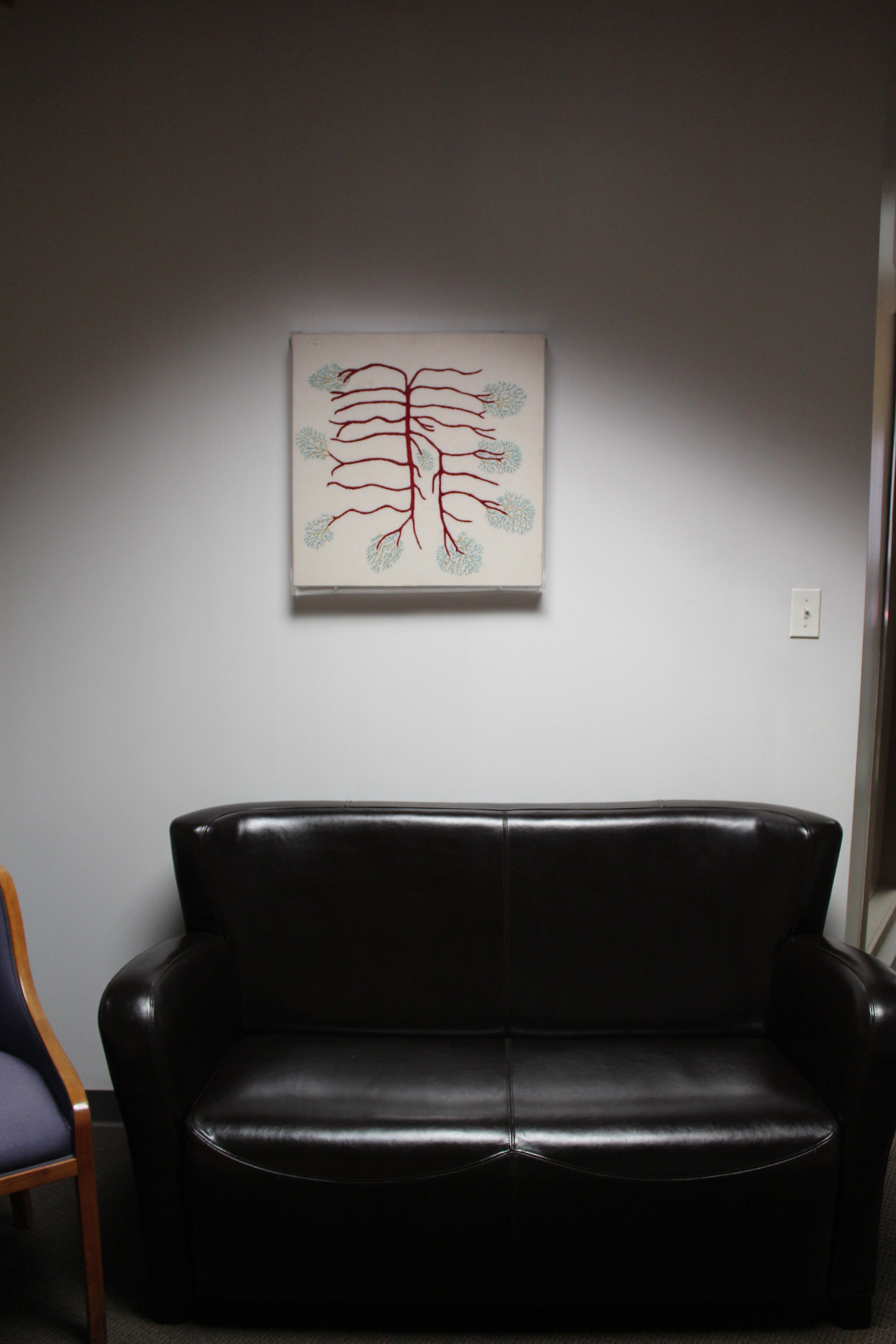
Installation views of “life wants lo live”.
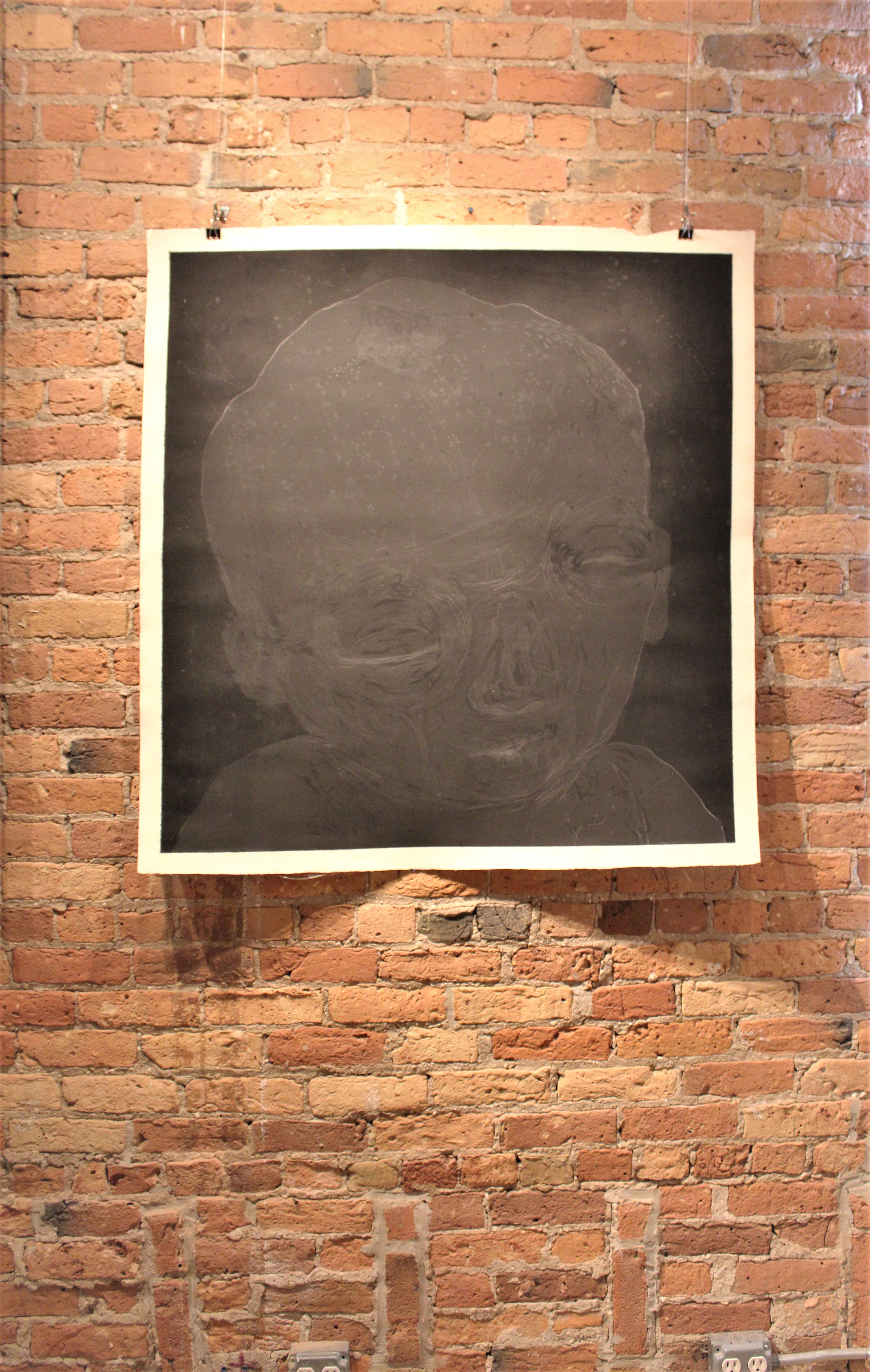
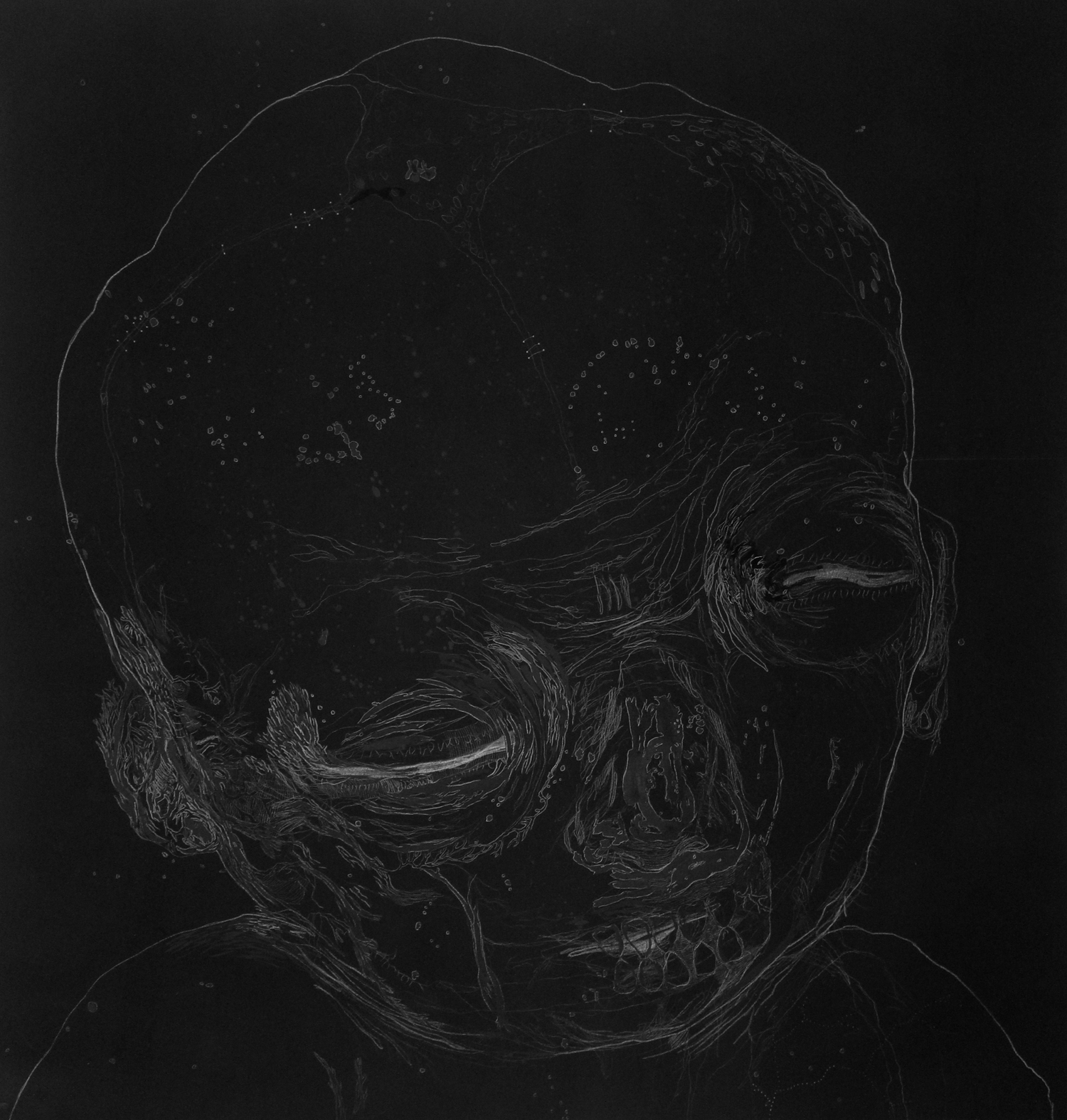
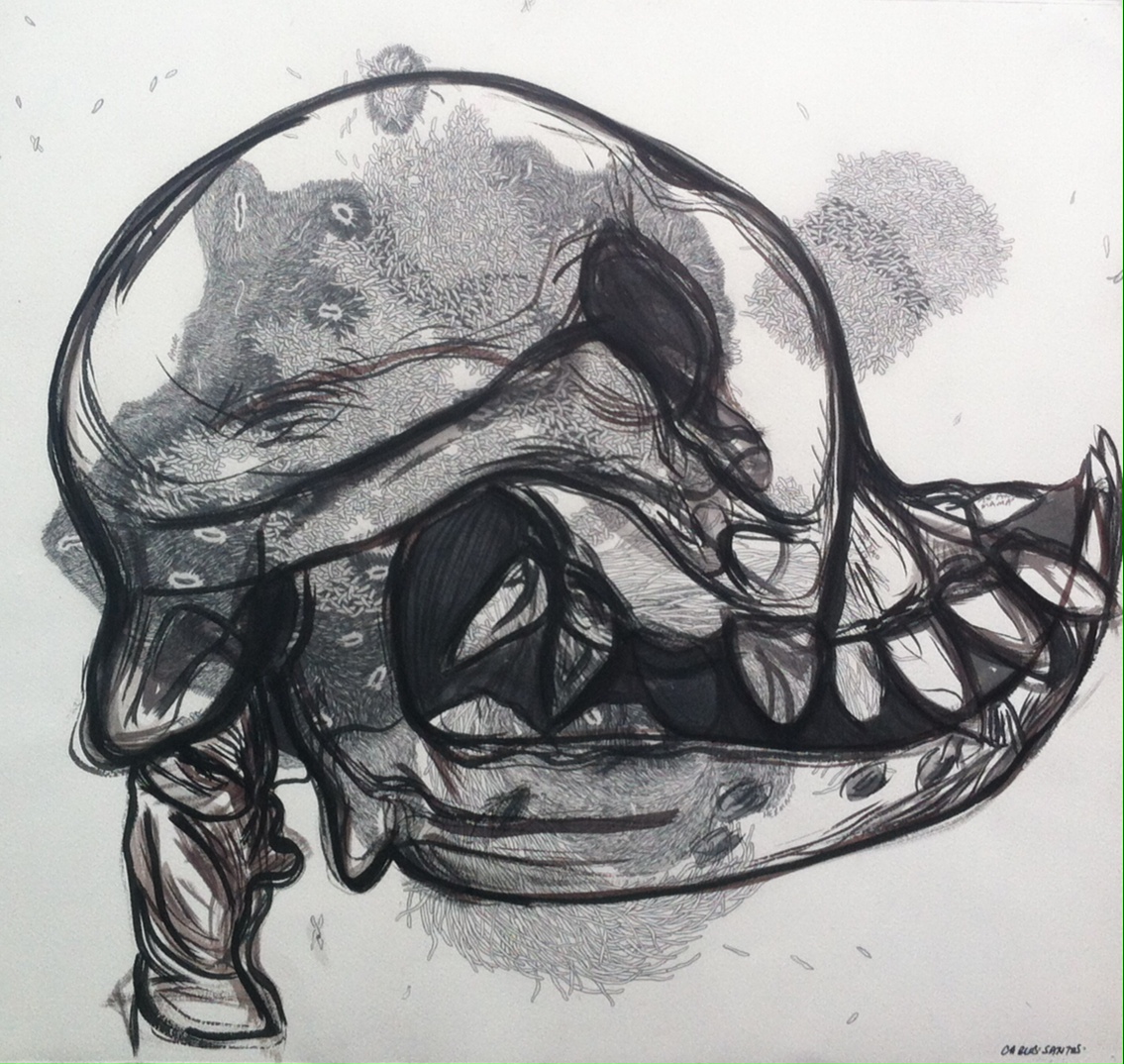
Charcoal and graphite on cotton paper. 43.3 in. x 43.3 in.
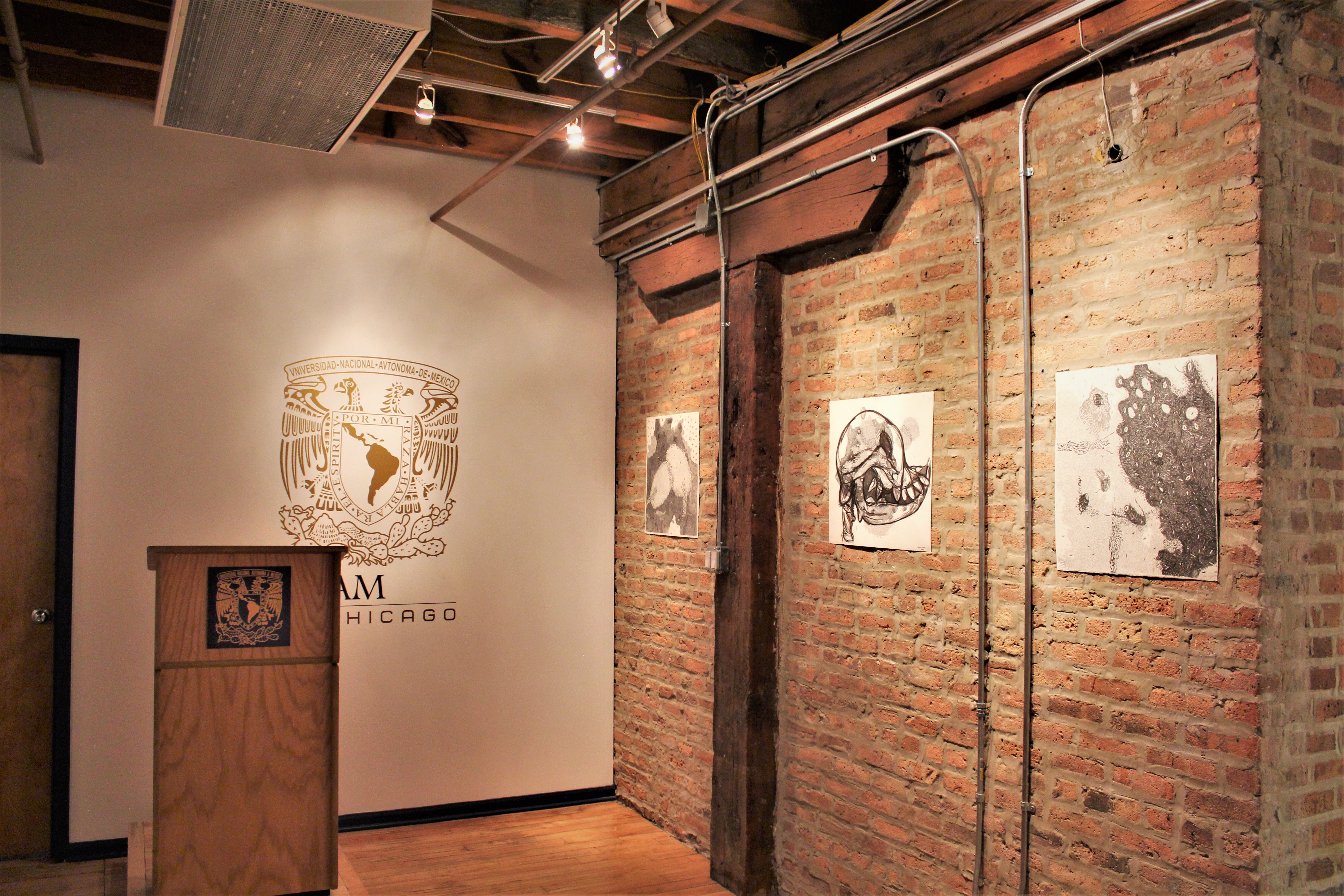
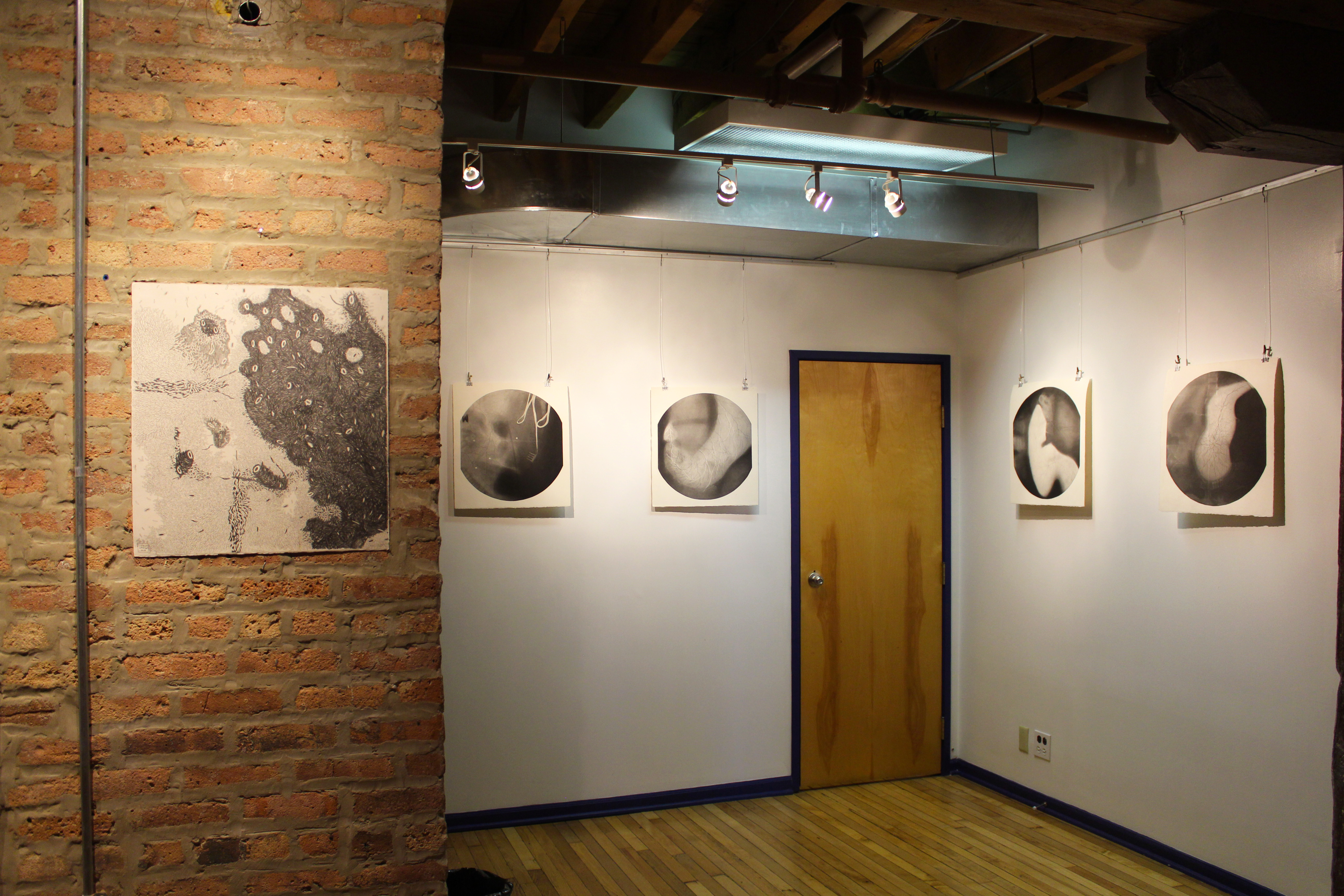
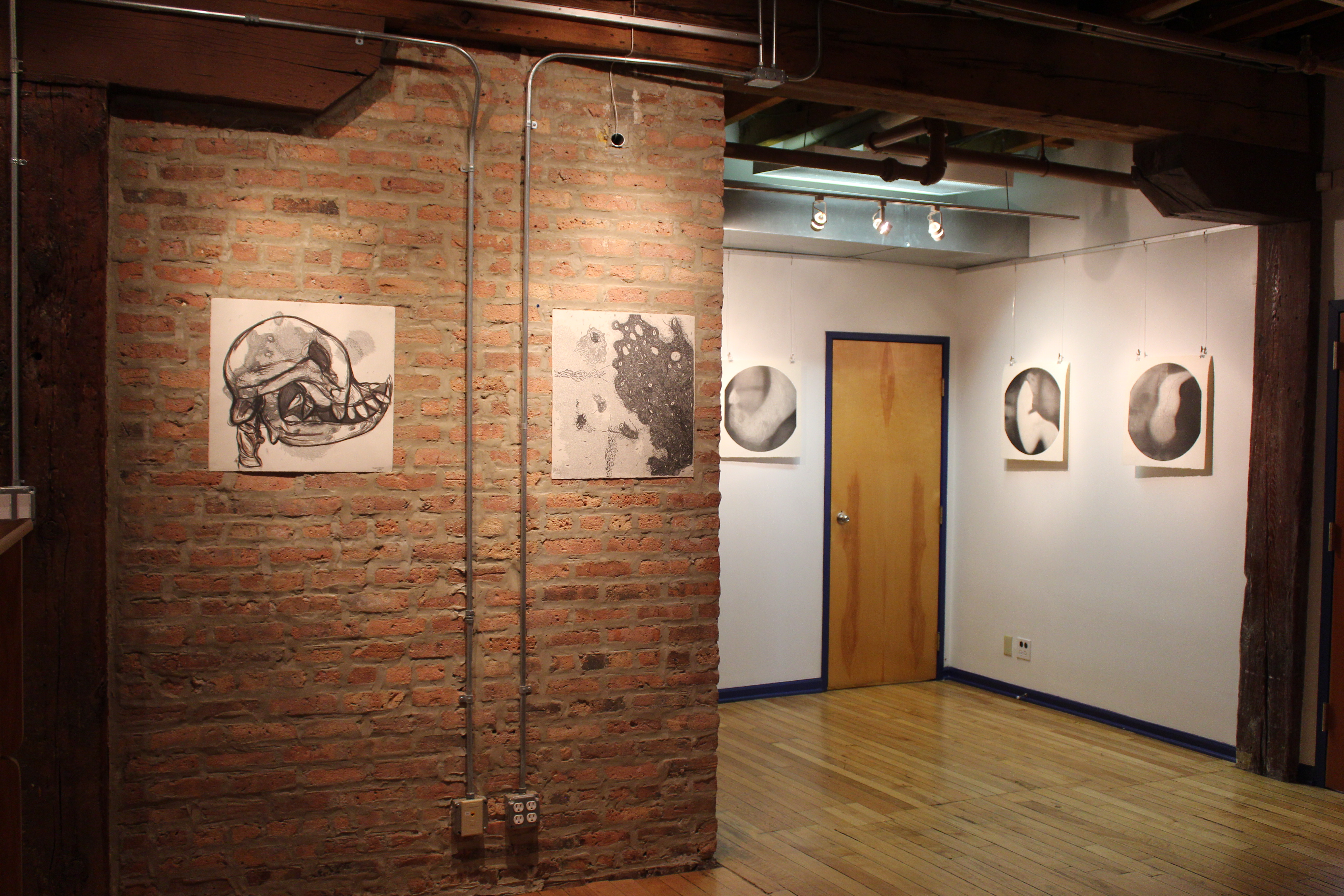
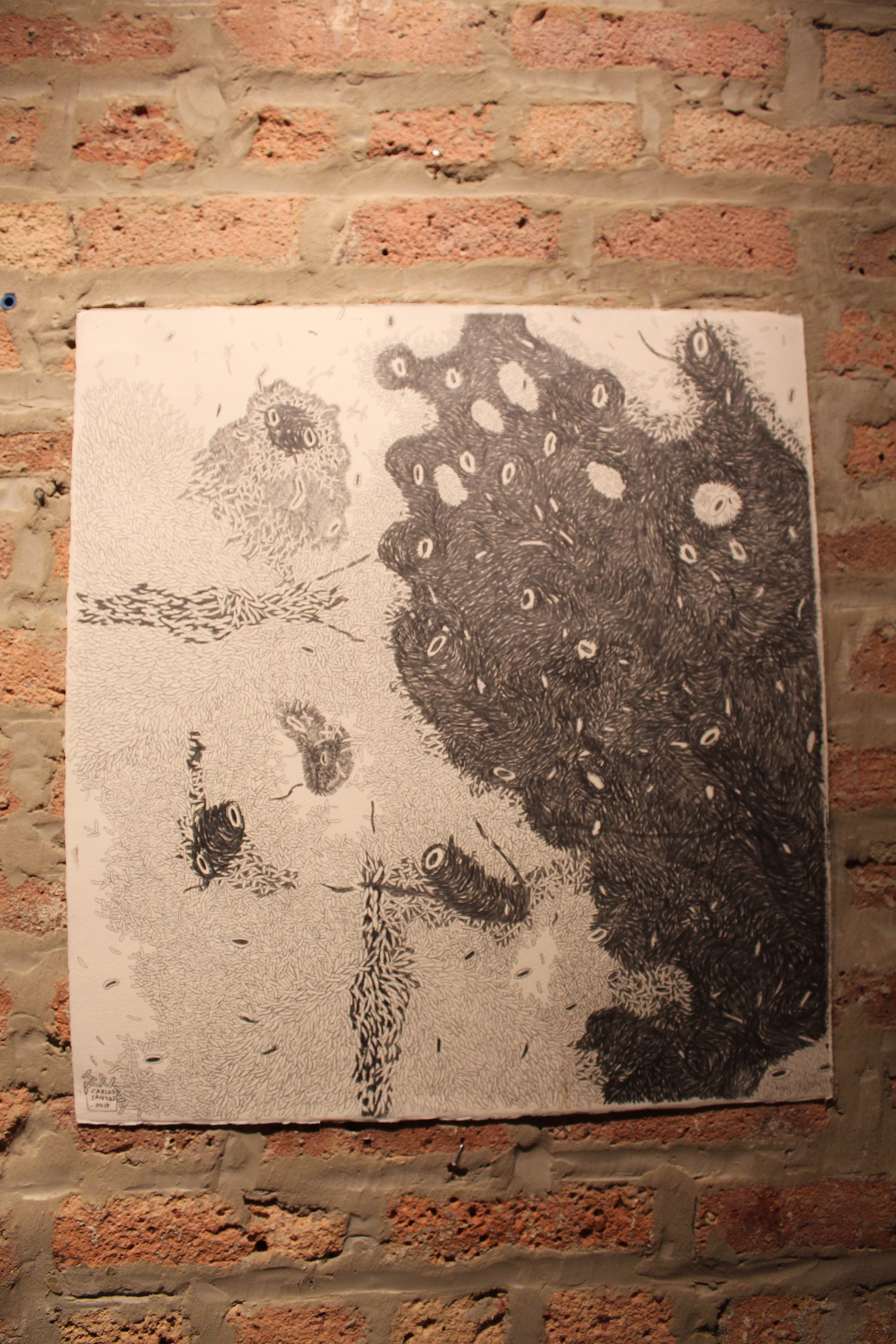
Ink, graphite on cotton paper. 23.6 in. x 23.6 in.
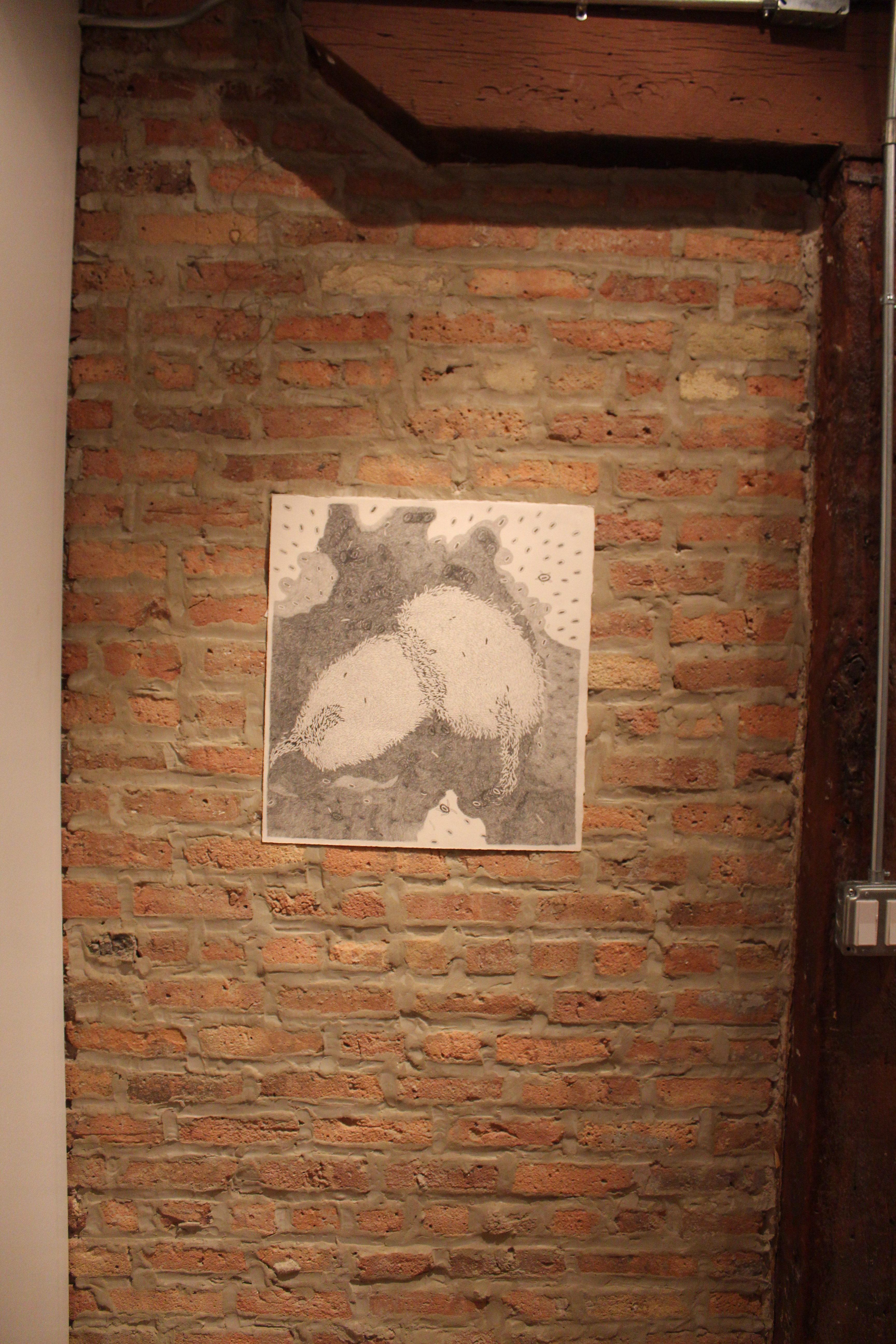
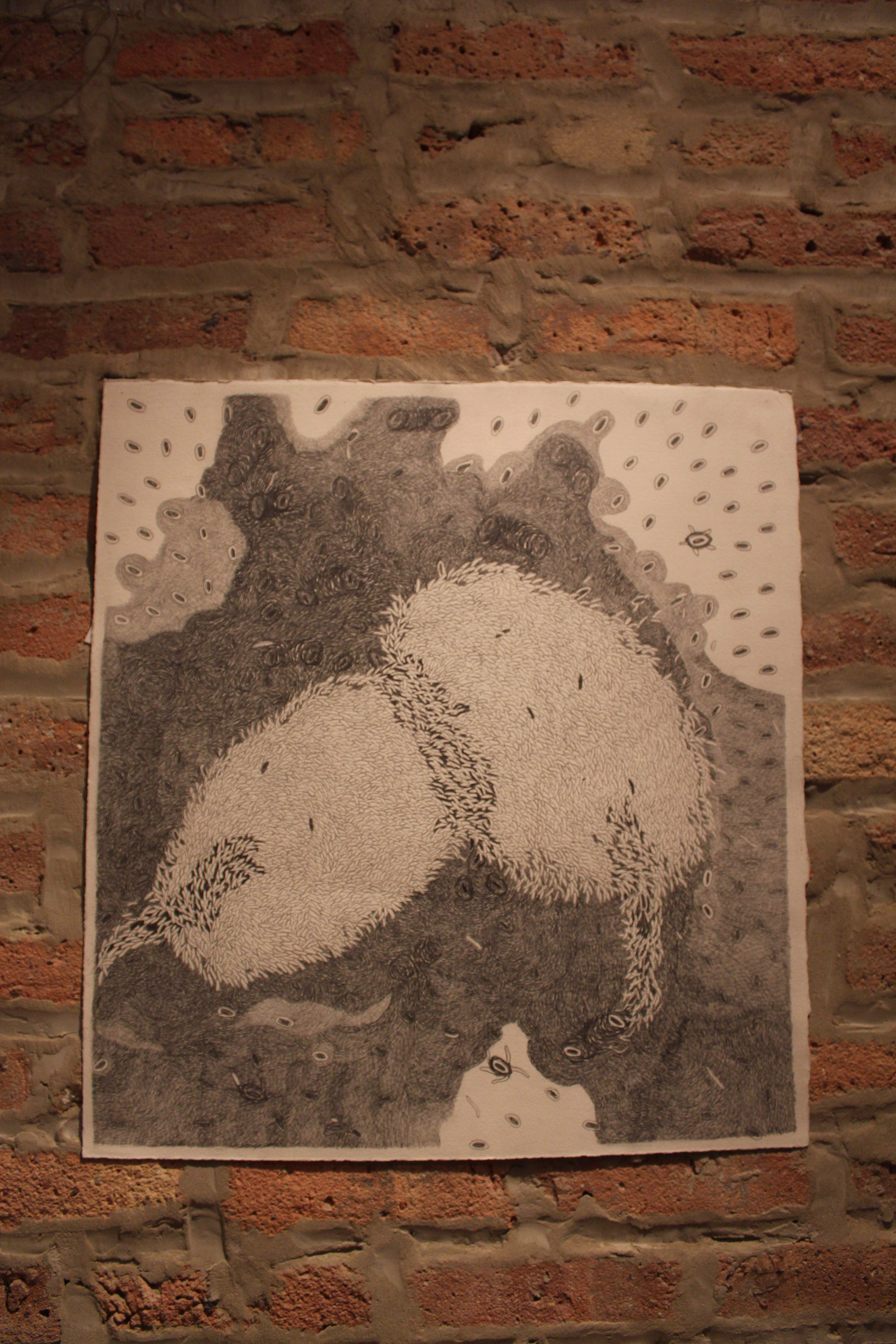
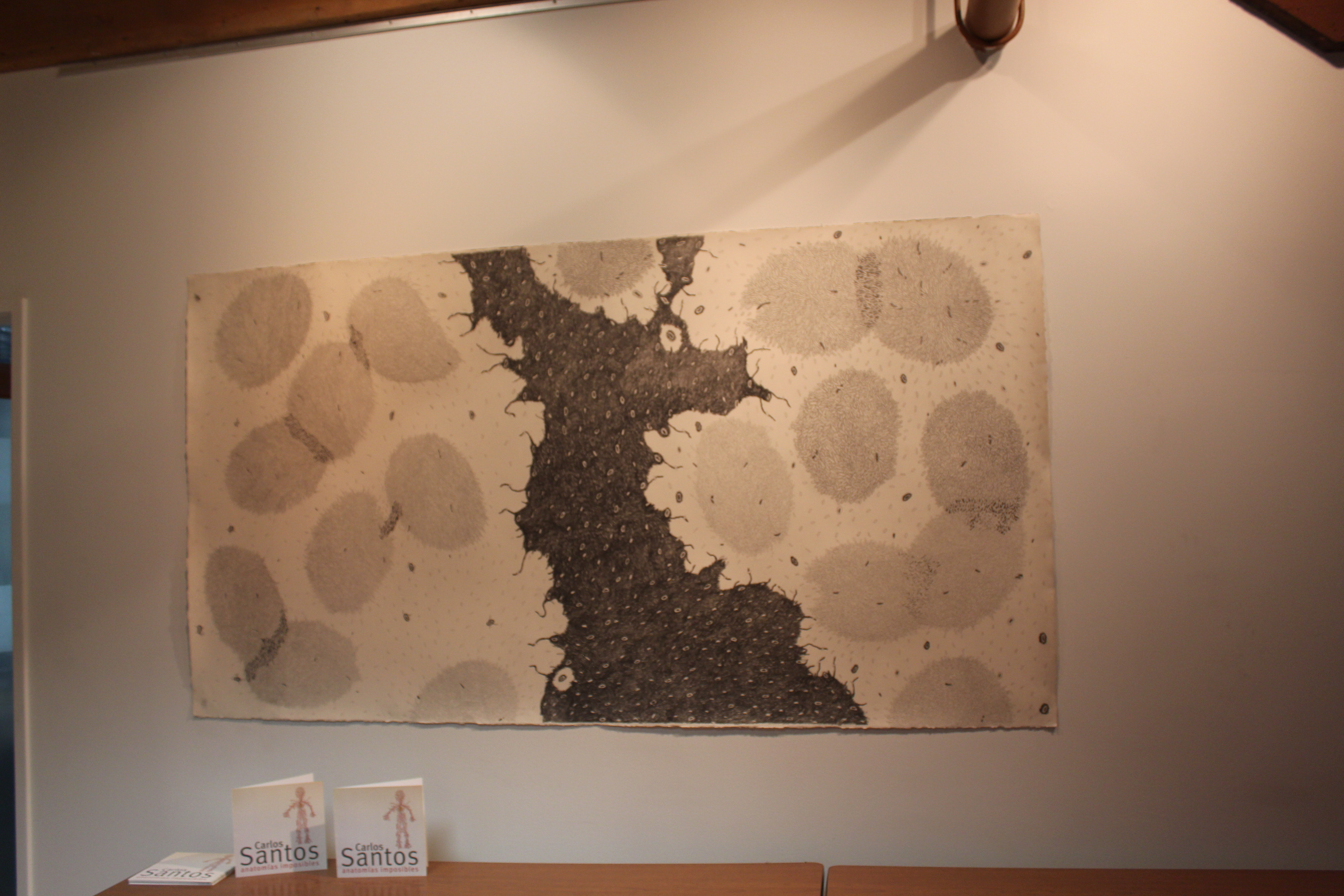
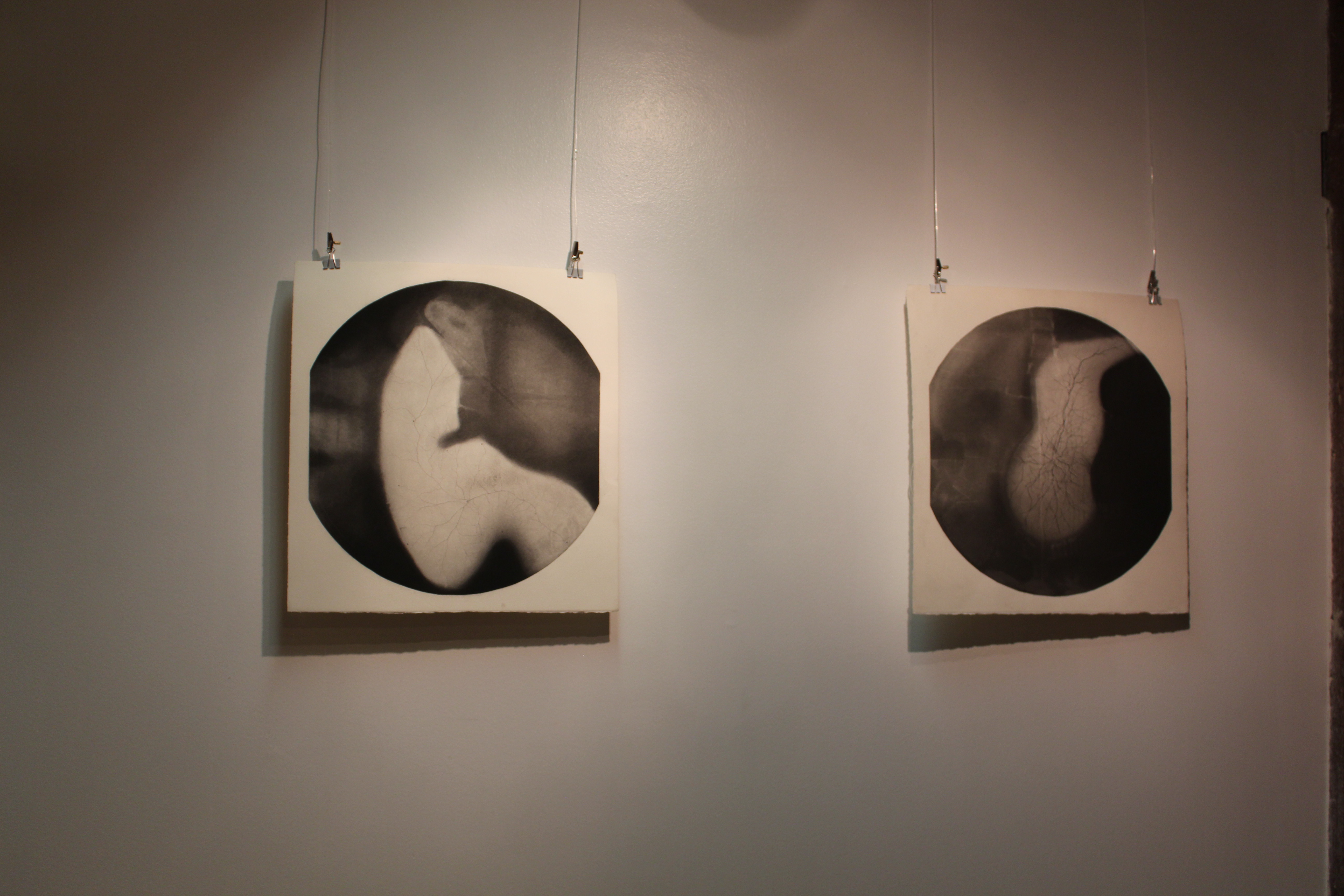
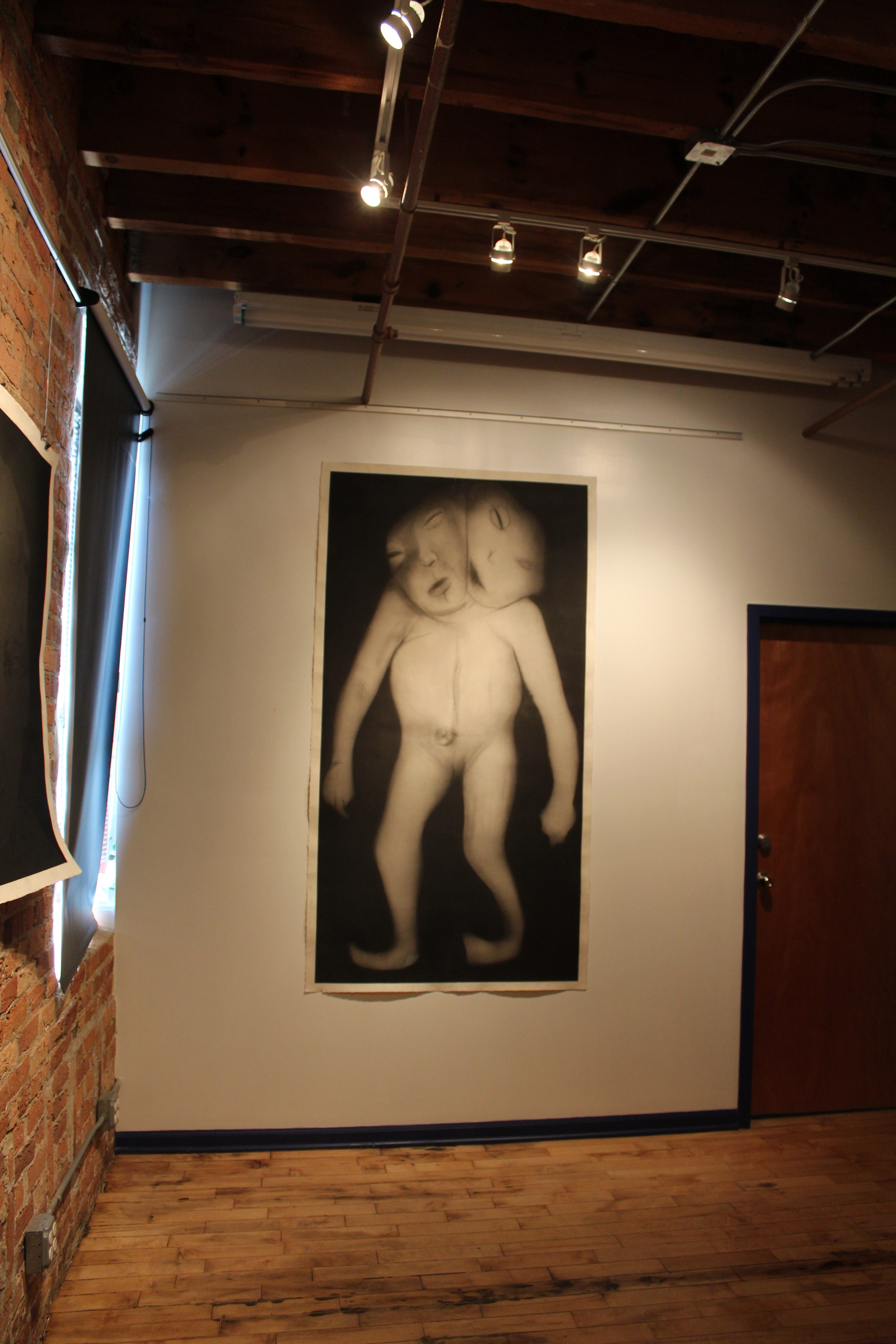
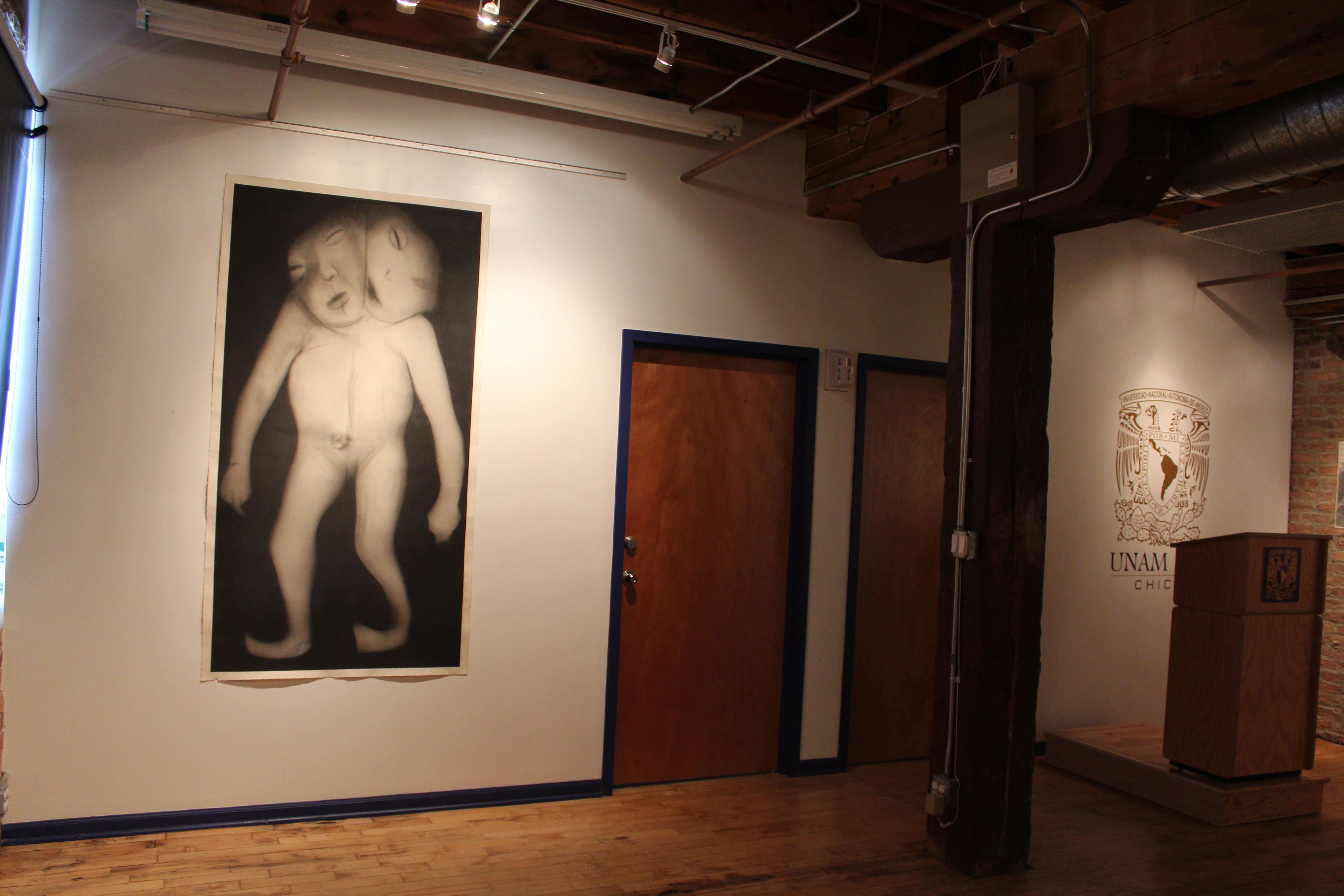
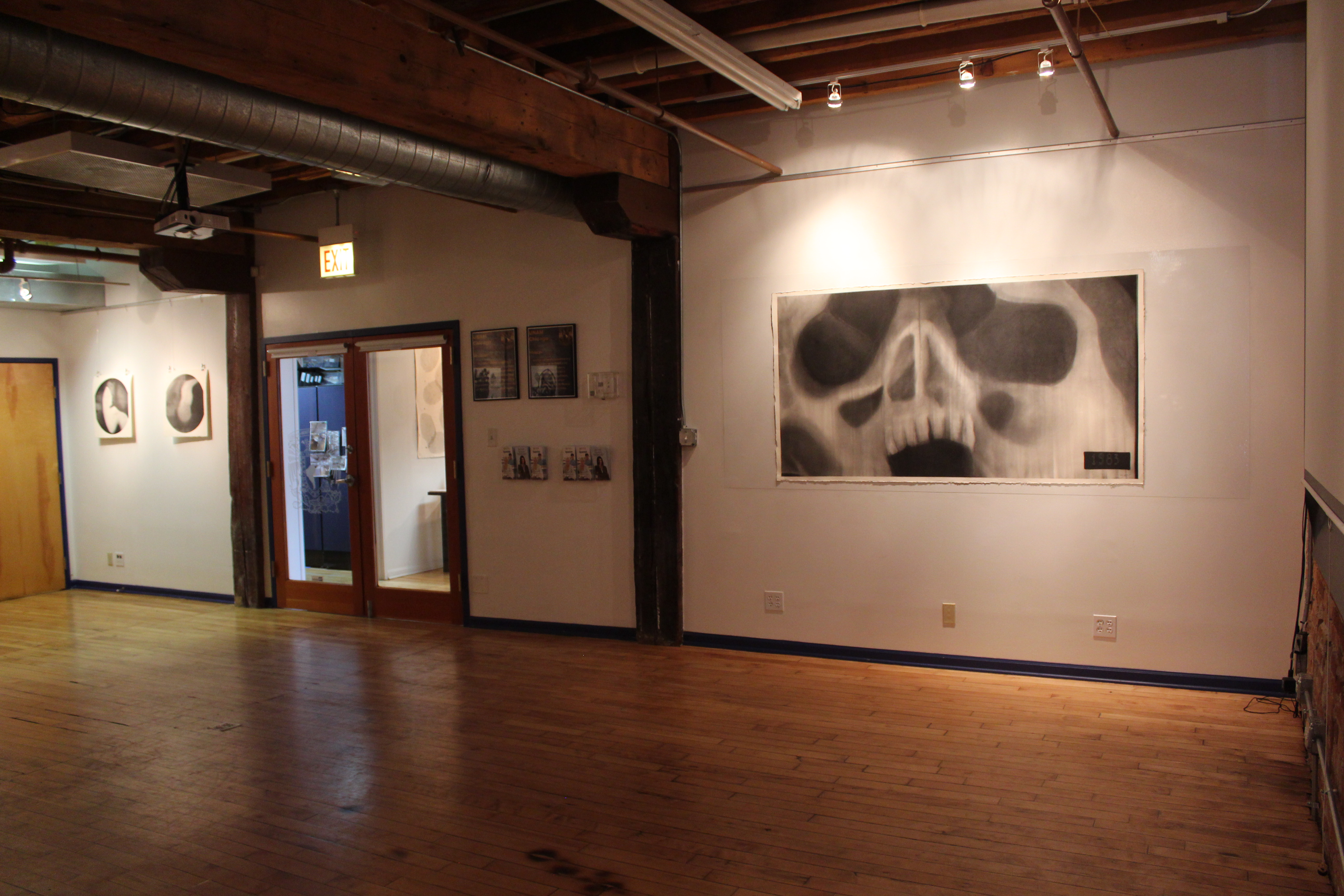
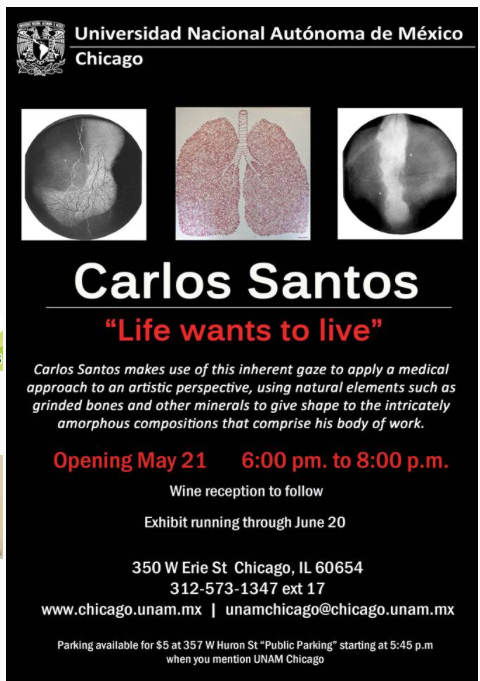
flyer of the invitacion.
Life wants to Live
UNAM. Chicago Ilinois, USA.
2015
UNAM. Chicago Ilinois, USA.
The temptation to appreciate the work of Carlos Santos is to be left admiring the expertise: embroidery, drawing, form, detail. A figure that at first glance looks human, transverse, X-rayed, contained bloody, is not “anatomy”: to say it is misleading. To say “rebuilt” is mono dimensional. “Altered” is descriptive. “Impossible,” preliminary.
Carlos’s work has red-arteria to be able to have a vein-blue, it takes root to have branches, it imitates human to grow as a vegetable. It goes beyond the body but inward, to feel that the epidermis is not even the first limit.
In their bodies there is a sum of entities that make the apparent function of the set different. There are narrations of devils,, sacrifices and none of the participants care sit other than holding a natural maze of laser-burned, asymmetrical, animal, monstrous questions. Questions that reveal complex levels of internal structure, intact parietals, ominously chosen to harbor an unknown safe from corrosion.
Innocent, small, a drawing and his ghost lie reclining on an invisible painter’s easel, among the high-load X-rays of pencil rays. Perhaps witnesses of the experiment from its inception, are those who from its conductive duality represent the double shift lookout that watches over graphite bones, amalgam teeth, X-ray drawings, and a child with ass eyes and black and white deformities no worse than a 3D ultrasound of the many we’ve seen forced to smile.
On Carlos’s work there are schemes, the plan that continues to post-study. There is a world that is observed through an endoscopic hose, with scientific and medicinal instruments, wave devices and computed that confirm that what we see inside is actually what is in our heads.
The artist has performed countless plastic biopsies to prove it.
Iván Buenader, agosto 2015
La tentación al apreciar la obra de Carlos Santos es quedarse admirando la pericia: del bordado, del dibujo, de la forma, del detalle. Una figura que a simple vista parece humana, transversal, radiografiada, contenidamente sangrienta, no es “anatomía”: decirlo es engañoso. Decirle “reedificada” es mono dimensional. “Alterado” es descriptivo. “Imposible”, preliminar.
La obra de Carlos tiene rojo-arteria para poder tener vena-azul, echa raíces para poder tener ramas, imita humano para crecer como vegetal. Va más allá del cuerpo pero hacia adentro mismo, para sentir que la epidermis no es siquiera el primer límite.
En sus cuerpos hay una suma de entidades que vuelven diferente la función aparente del conjunto. Hay narraciones de diablos, orgías, sacrificios y a ninguno de los participantes le importa otra cosa que sostener un laberinto natural de preguntas caladas con láser, asimétricas, animales, monstruosas. Preguntas que develan complejos niveles de estructura interna, parietales intactos, siniestramente escogidos para albergar una incógnita a salvo de la corrosión.
Inocente, pequeño, un dibujo y su fantasma yacen reclinados sobre un caballete de pintor invisible, entre las radiografías de alta carga de rayos lápiz. Quizá testigos del experimento desde su inicio, son quienes desde su dualidad conductora representan al vigía doble turno que vela por los huesos grafito, los dientes amalgama, los dibujos rayos X, y un niño de ojos culo y deformidades blanco y negro no peores que un ultrasonido 3D de los tantos que hemos visto obligados a sonreír.
Sobre la obra de Carlos hay esquemas, el plan que prosigue al post-estudio. Hay un mundo que se observa a través de una manguera endoscópica, con instrumentos científicos y medicinales, aparatos de onda y computados que confirman que lo que vemos dentro es en realidad lo que hay en nuestras cabezas.
El artista ha realizado incontables biopsias plásticas para demostrarlo.
Iván Buenader, agosto 2015
