
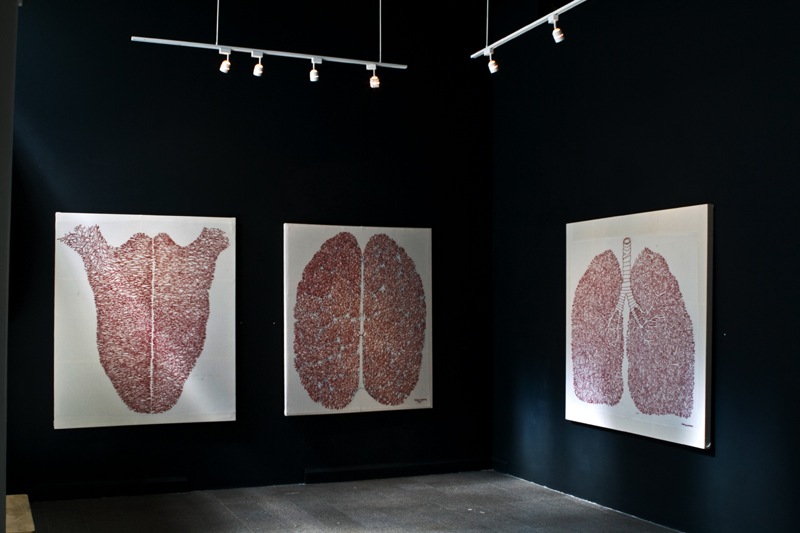
Installation views of “Anatomias Reedificadas” at “Traeger & Pinto Gallery”. 2010
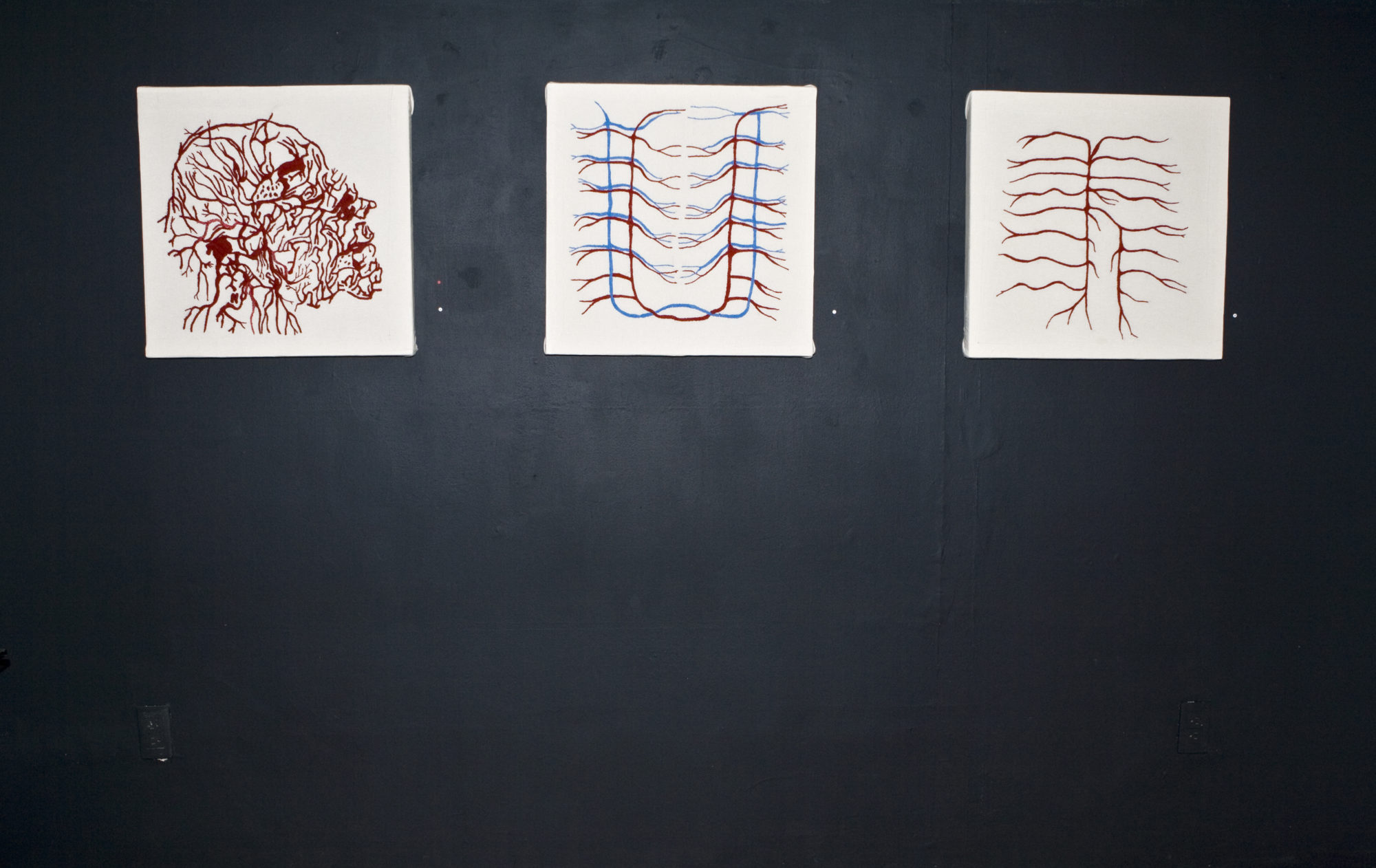
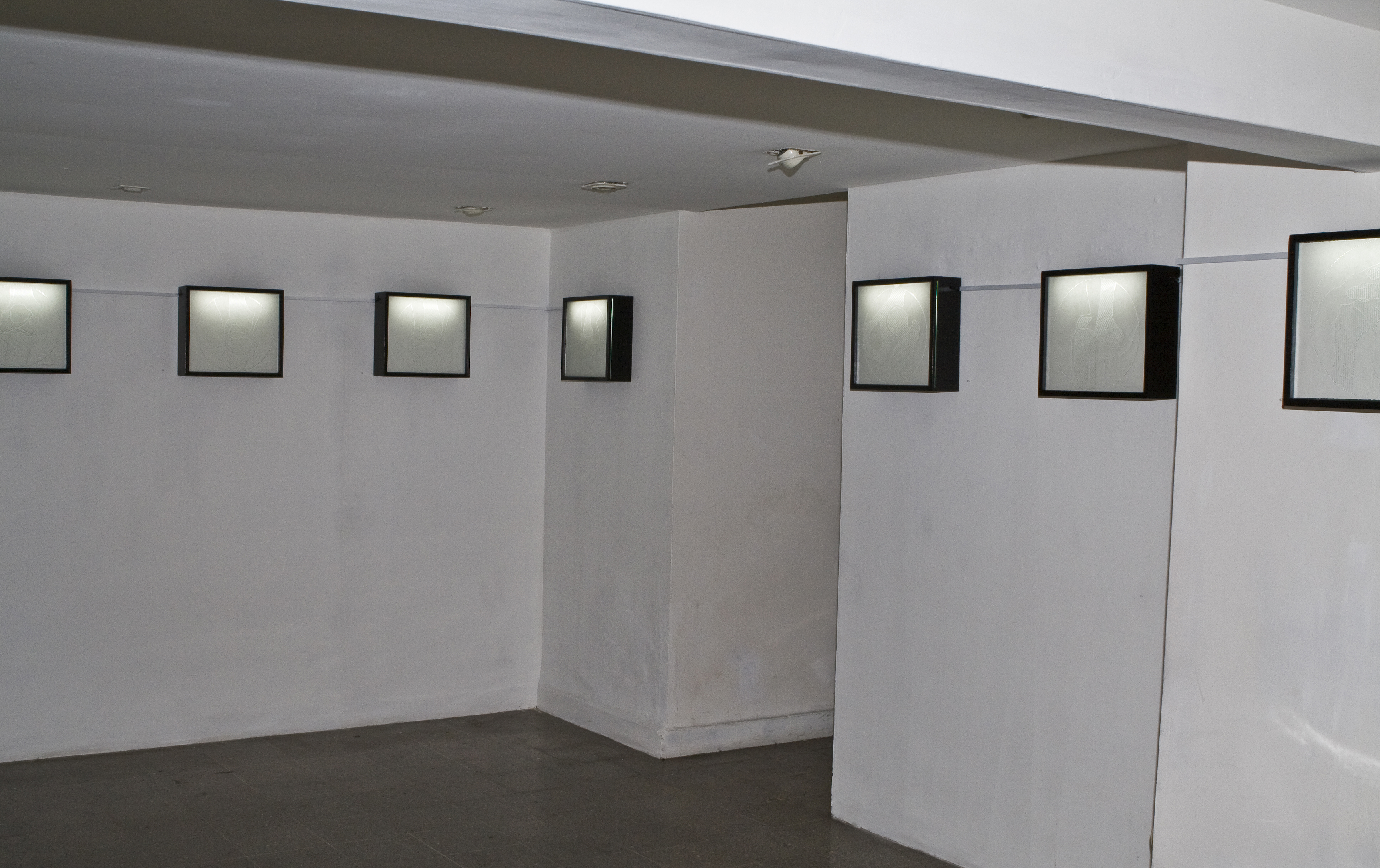
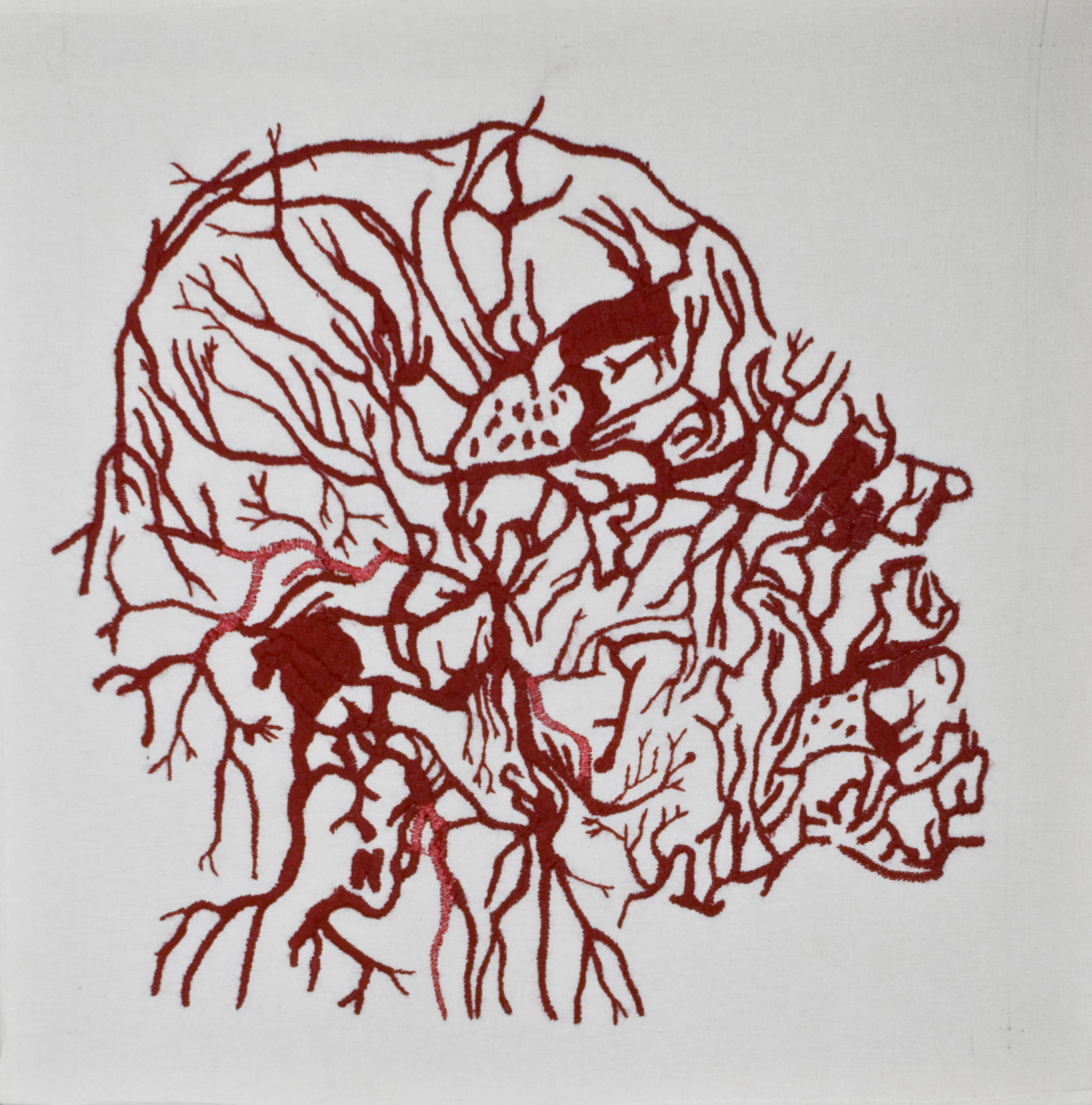
Selfportrait. Embordery on linen.
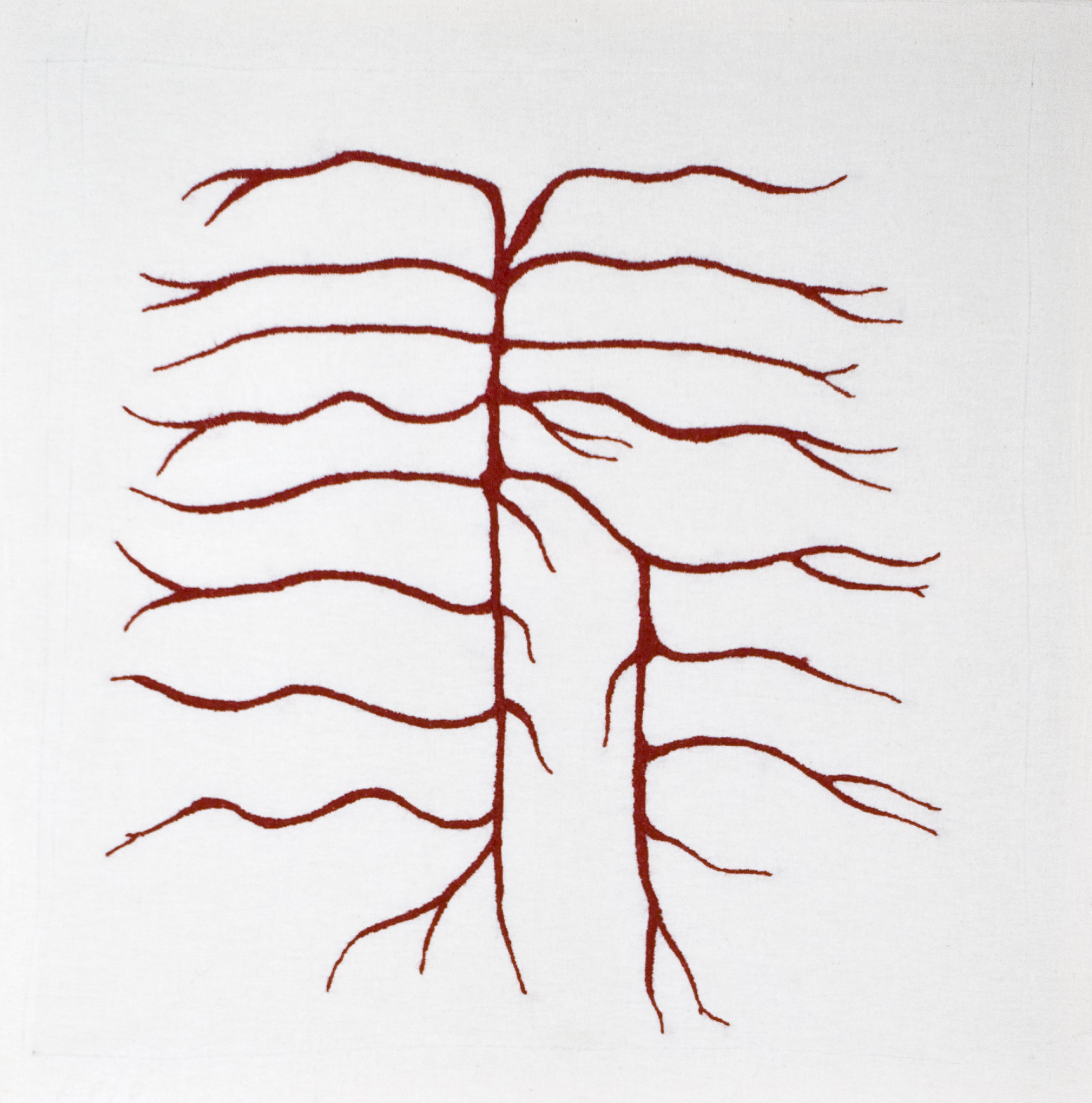
Roots. Embordery on linen.
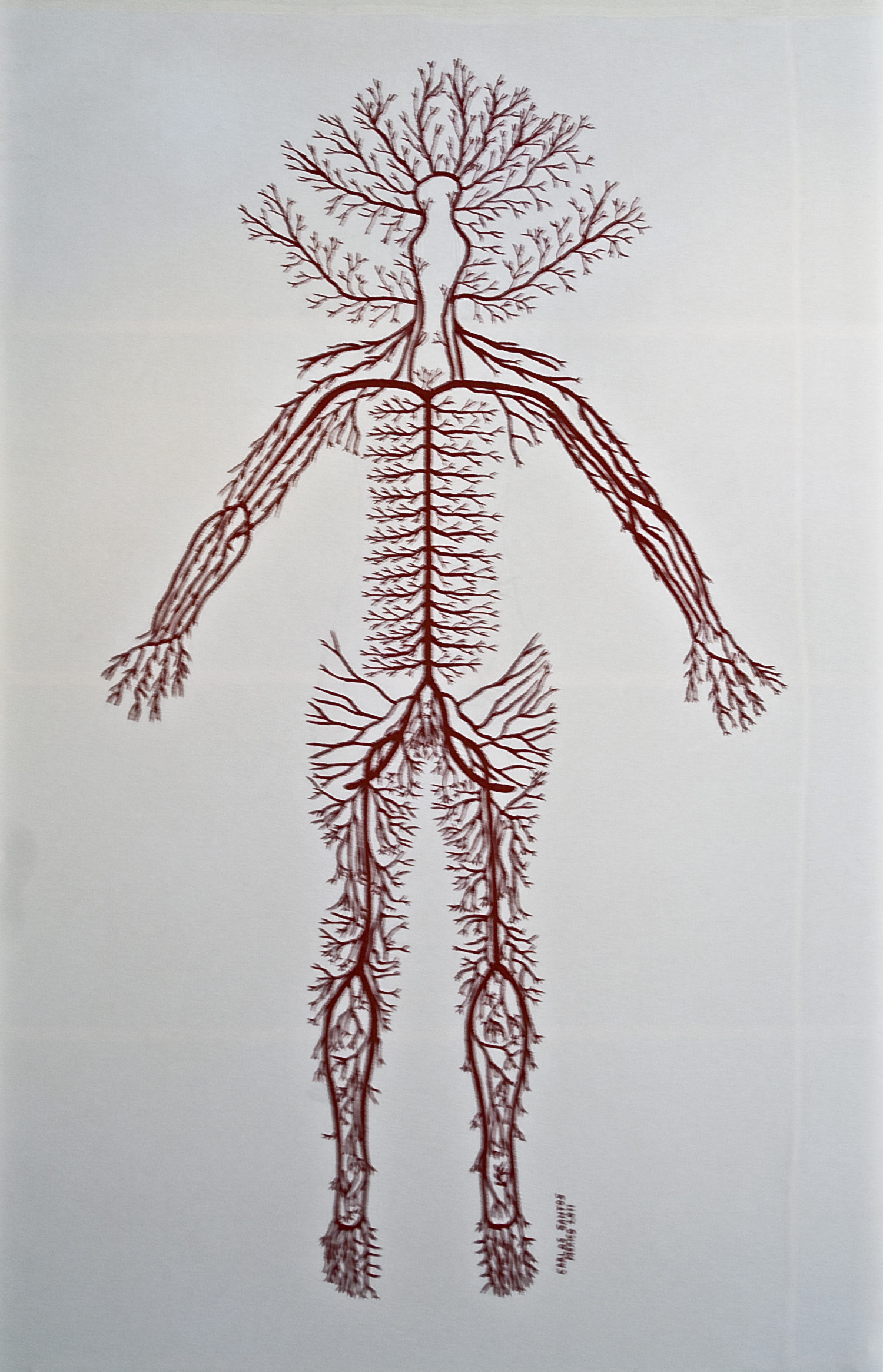
Mom. Embordery on linen. Embordery by my mom.
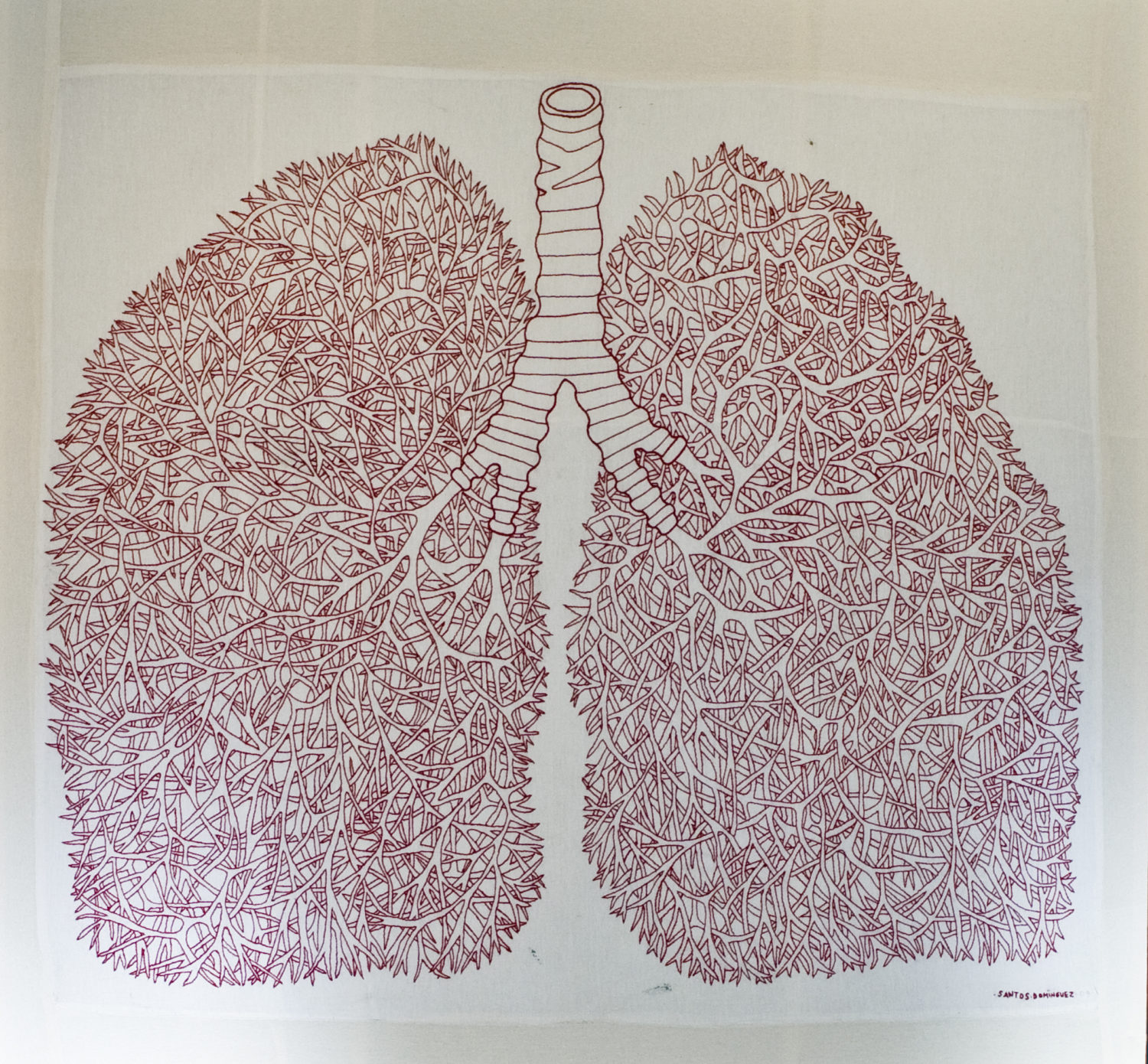
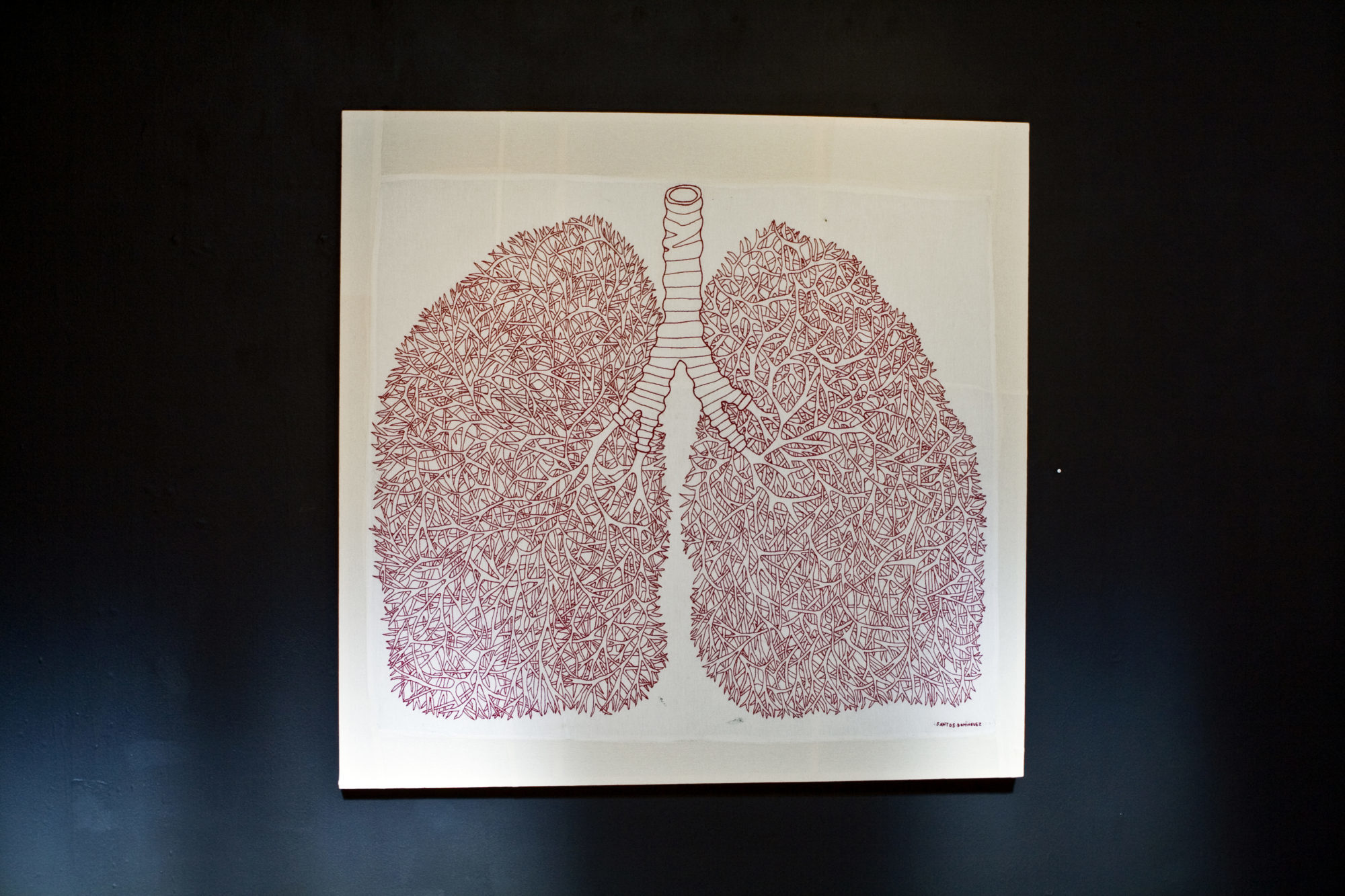
Lungs. Embordery on linen. Embordery by my mom
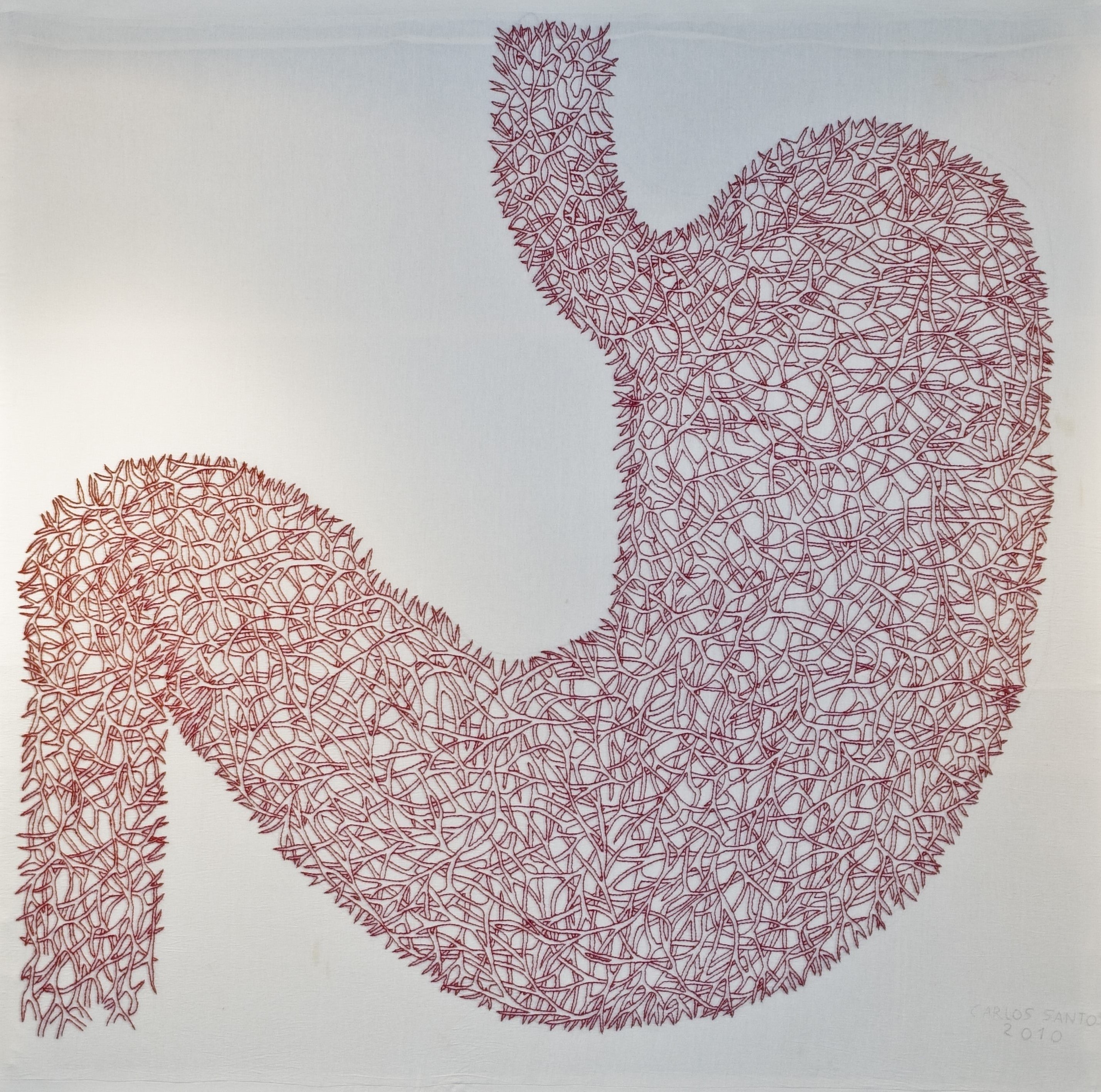
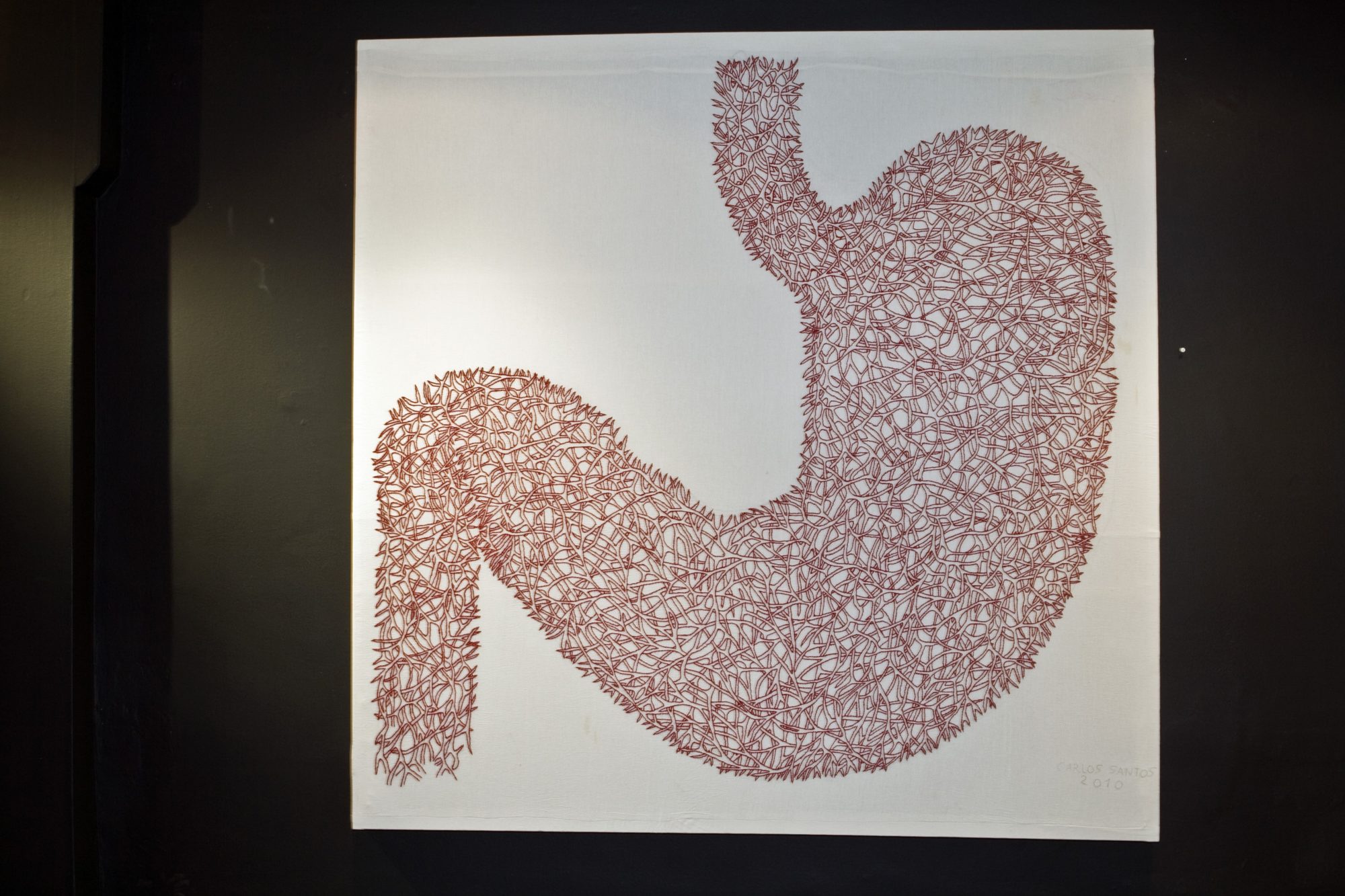
Stomach. Embordery on linen. Embordery by my mom
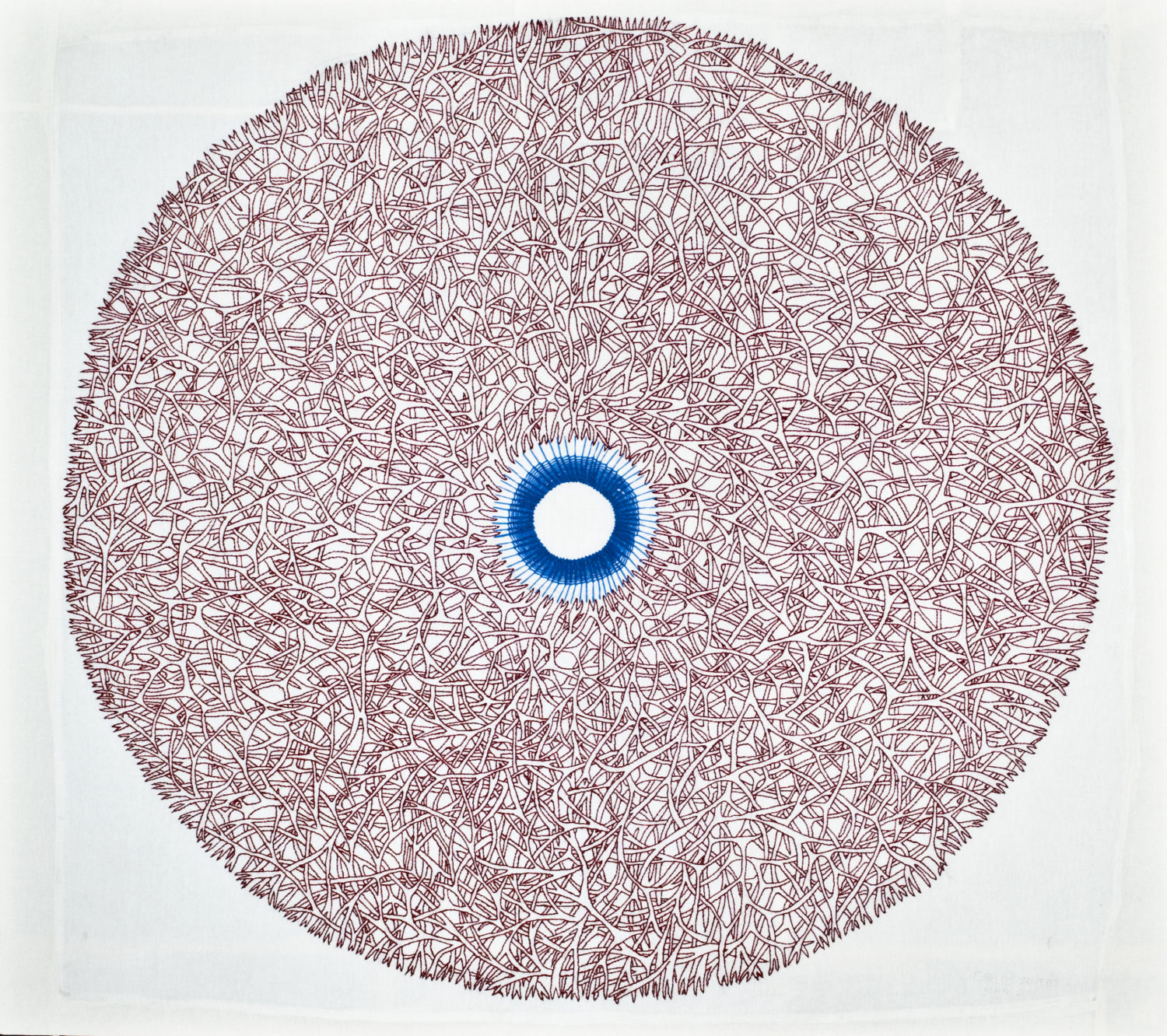
Eye. Embordery on linen. Embordery by my mom
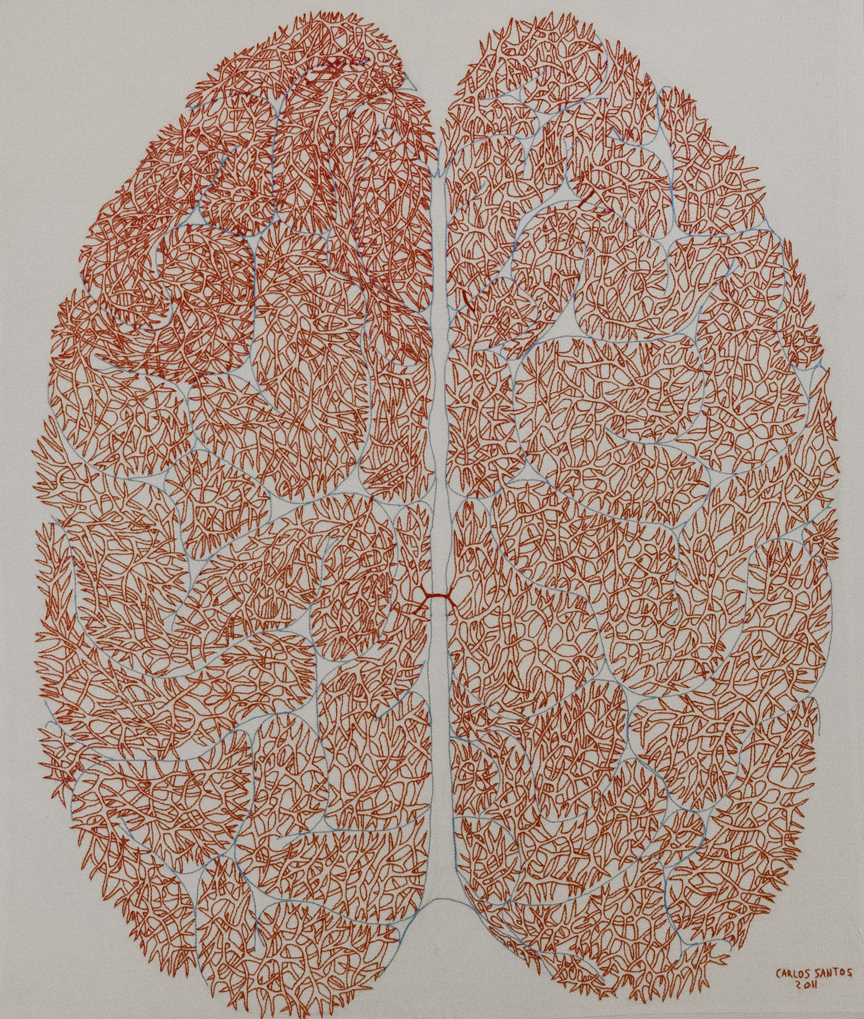
Brain. Embordery on linen. Embordery by my mom
Rebuilt Anatomy
Mexico City
2011
Mexico City
Rebuilt Anatomy
“Art is not a thing but a way”.
Elbert Hubbard
I have been following the work of this young creator, Carlos Santos, for some time; perhaps by a natural impulse that covets what the other has (creative talent). This is how, over almost six years, I have had the opportunity to appreciate this new trajectory in development, always perceiving in their work the genuine interest of those who impose theself on all adversity through creativity, supplementing schooling by a plan learning staff.
The current work of Carlos Santos is the result of this restlessness that has led him to explore different formal means; however, all of them are linked through a discourse, which in this case is understood as concept and form: the body.
Each piece is itself an exploration of the form of the living being, seen from a reverse perspective, from what is not apparent, but internal, the compounds that make up the mass called body and that we know as flesh; this complicated structure made up of muscles, skin, tendons, bones, ligaments, nerves, brain and spinal cord. But its visual translation is not a true-to-reality report by medical or academic pretensions, but an intuitive reinterpretation work on forms and their functions.
The selection of work consists of three formal groups: drawing, embroidery and light boxes. The drawing is proposed from a work of apparent “naturalism”, in which through plastic licenses creates a reality or a simulated anatomy of the various organs; blood canal networks or veins extend beyond the very territoriality of the sheet of paper and are intertwined and woven to set up enzard structures; this is done using a two-plane technique in which it mixes the “fading” of charcoal and graphite with a delicate line work in ink or pencil, creating both a shape and an atmosphere.
The innovative need in his work led him to the expanded fields of drawing, finding a way of replacing the line through the thread, in which embroidery complements the very task of drawing, and in which discipline is reintegrated into transgendertonity to find itself d I enter more than one artistic category. This work brings us closer to an intimate facet that affects him in the maternal part, from whom he learned to understand this matter as a way to build his links to explain through the artistic. Its intertwined lines open on the surface of the fabric as mandalas or diagrams of studied balances and symmetries, in which the strokes are made noticeable at various visual levels.
In this same sense we find a box of light in which translucent drawings are presented, and in which the replacement of the line is appreciated by small perforations, creating the qualities of the stroke through the calibers of the sharp element (needle), and whose traces left in the way of multiple perforations, are themselves the persistent discharges of the idea; creating recognizable or transmuted organic forms through the lines.
This is how the different elements that make up the sample, allow us to understand a work that goes from the traditional to the ingenious, generating a new iconography transferable from one medium to another, within a solid proposal that is supported conceptually, and the which is dressed through mixtification and combinatorial articulation and formal expressive means, expanding the drawing to unthinkable fields.
Rafael Alfonso Pérez and Pérez
Curator.
Anatomías reedificadas
“El arte no es una cosa sino un camino”.
Elbert Hubbard
Hace algún tiempo que vengo siguiendo el trabajo de este joven creador, Carlos Santos; tal vez por un impulso natural del que codicia lo que el otro tiene (talento creativo). Es así como, a lo largo de casi seis años, he tenido oportunidad de apreciar esta novel trayectoria en desarrollo, percibiendo siempre en su trabajo el interés genuino de quien se impone a toda adversidad través de la creatividad, supliendo la escolaridad por un plan personal de aprendizaje.
La obra actual de Carlos Santos es resultado de esa inquietud que lo ha llevado a explorar distintos medios formales; sin embargo, todos ellos están vinculados a través de un discurso, que en este caso se entiende como concepto y forma: el cuerpo.
Cada pieza es en sí, una exploración de la forma del ser vivo, visto desde una perspectiva inversa, desde lo que no es aparente, sino interno, los compuestos que conforman a la masa denominada cuerpo y que conocemos como carne; esa estructura complicada integrada por músculos, piel, tendones, huesos, ligamentos, nervios, cerebro y médula espinal. Pero su traducción visual no se trata de reporte fiel a la realidad por pretensiones médicas o académicas, sino de un trabajo de reinterpretación intuitiva sobre las formas y sus funciones.
La selección de obra se compone de tres grupos formales: el dibujo, el bordado y las cajas lumínicas. El dibujo se plantea a partir de un trabajo de aparente “naturalismo”, en el que a través de las licencias plásticas crea una realidad o una anatomía simulada de los diversos órganos; las redes de conducto sanguíneo o venas se extienden más allá de la propia territorialidad de la hoja de papel y se entrelazan y se tejen para configurar enzarzadas estructuras; ello realizado mediante en una técnica en dos planos en la que mezcla el “esfumato” de carbón y grafito con un delicado trabajo de línea a tinta o lápiz, creando a la vez una forma y una atmósfera.
La necesidad innovadora en su trabajo lo llevó a los campos expandidos del dibujo, encontrando una forma de sustitución de la línea a través del hilo, en el que el bordado suple la tarea misma de dibujar, y en la que la disciplina se reintegra en transgenericidad para hallarse dentro de más de una categoría artística. Esta labor nos acerca a una faceta íntima que lo afecta en la parte materna, de quien aprendió a entender este asunto como una manera de construir sus enlaces para explicar a través de lo doméstico lo artístico. Sus entrelazadas líneas se abren en la superficie de la tela a manera de mandalas o diagramas de estudiados equilibrios y simetrías, en los que los trazos se hacen notorios en diversos niveles visuales.
En este mismo sentido encontramos una cajas de luz en las que se presentan dibujos translúcidos, y en los que se aprecia la sustitución de la línea por pequeñas perforaciones, creando las calidades del trazo a través de los calibres del elemento punzante (aguja), y cuyos rastros dejados a manera de múltiples perforaciones, son en sí las descargas persistentes de la idea; creando a través de las líneas formas orgánicas reconocibles o transmutadas.
Es así como los distintos elementos que conforman la muestra, nos permiten entender un trabajo que va de lo tradicional a lo ingenioso, generando una nueva iconografía transferible de un soporte a otro, dentro de una sólida propuesta que se sostiene en lo conceptual, y la cual se viste a través de la mixtificación y la articulación combinatoria y de medios expresivos formales, expandiendo el dibujo a campos impensados.
Rafael Alfonso Pérez y Pérez
http://artealdia.mx/artista-invitado/carlos-santos-anatomias-reedificadas/
http://notesonlooking.com/?p=11027
